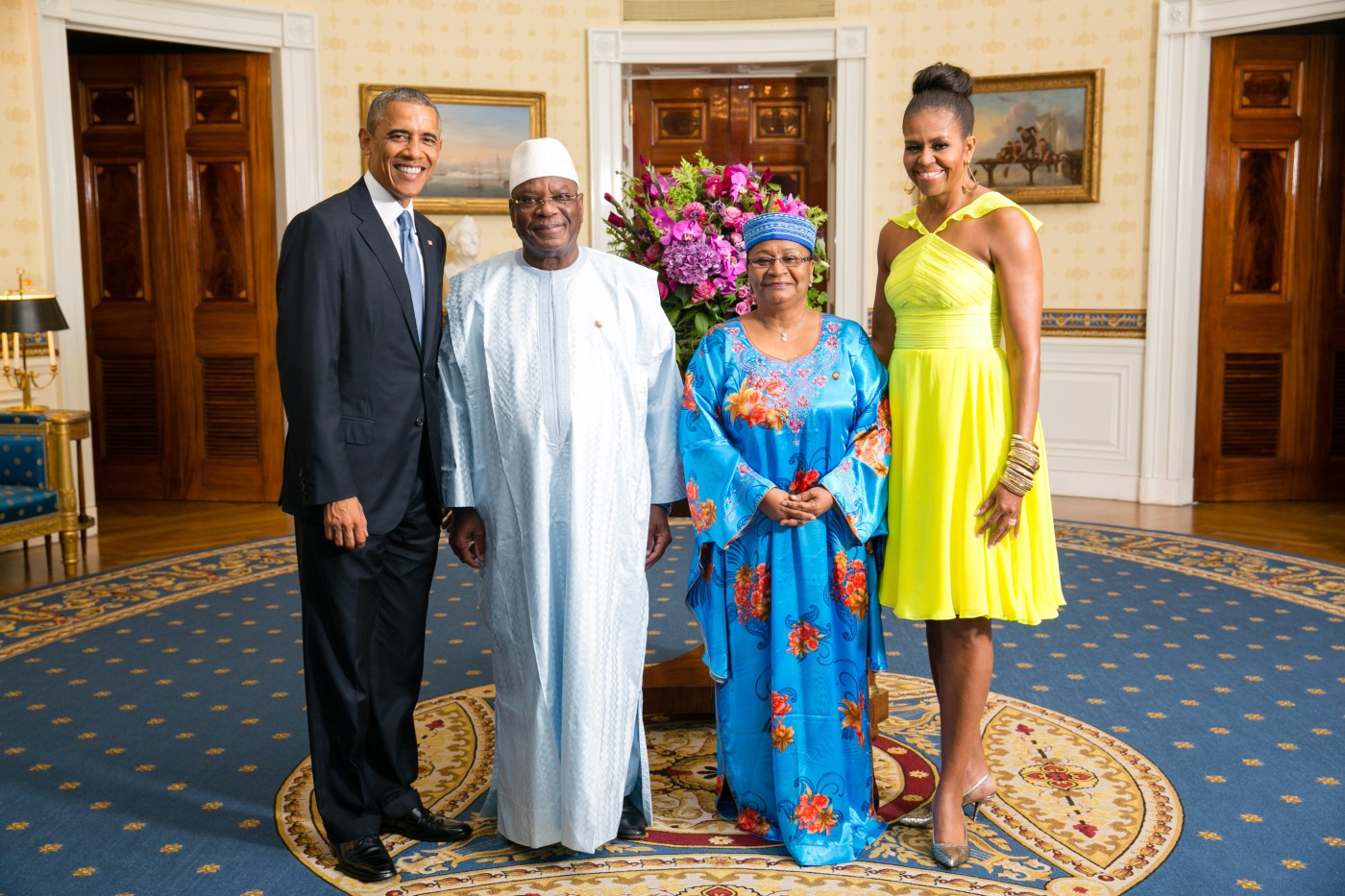
The dichotomy between the ‘good’ black and ‘bad’ black, the ‘revolting savage’ and the ‘noble savage’, the ‘black gentleman’ and the ‘primitive black’ has a long history. So influential were these categorizations that they were eventually propagated by the subjects themselves, throughout and after their subjugation.
Those considered ‘good’ blacks were those who conformed to European ideals of civility, and politics. They spoke not of the destruction of the empires, countries, or institutions which had oppressed the ‘good’ and ‘bad’ black. They instead attempted to improve their bedraggled race within a political framework which would allow blacks to rise with as little disturbance to white supremacy as possible. Those deemed ‘bad’, plainly, did not. They instead promoted what were considered dangerous political ideas, and refused to conform to widely accepted notions of societal and political propriety. Rather than attempt to uplift their own people under the auspices of white patrons they built radical organisations led and followed by blacks alone. They spoke not of black improvement on white timetables, or under white guidance, but sought immediate freedom at the expense of white privilege.
So abiding were these notions that ‘black politics’ in the western world was, in essence, dominated by figures which fit, or were perhaps placed, into the created categories. The fight for supremacy in early twentieth century African American politics between Du Bois and Marcus Garvey was dominated by the difference between the two great rivals. Their rivalry, and that of their race-based organisations, were often set in the ‘good’ black, ‘bad’ black framework.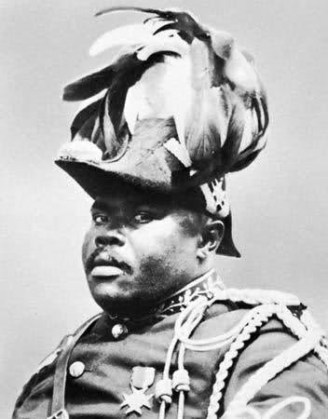
W. E. the ‘good ’Du Bois, eloquent, educated, and affable, face of a race improvement organisation in which he was the only person of partial colour, advocated a gradual improvement of the black race beneath the guidance of its ‘talented tenth’. The ‘talented tenth’ of the black populous, he seldom mentioned, were to operate at the behest of its white benefactors who had a vested interest in the status quo remaining, well, the status quo.
Yet, improvement was upon offer. In an age of Jim Crow, racial segregation, and overt racism Du Bois promoted an integrationist ideal in which peoples of all races could live beneath the star-spangled banner without racial prejudice poisoning utopia. Towards this end, oppressed and oppressor were to work together, essentially, uplifting each other and the United States. As Du Bois stated the ‘the battle of the Negro is to be fought right here in America’.
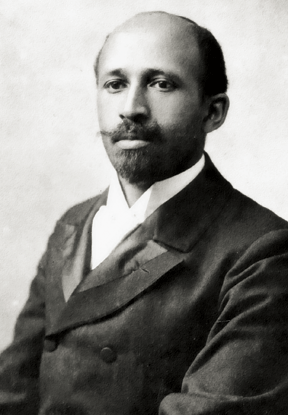
Marcus the ‘bad’ Garvey eloquent, educated, and affable, president of a race-based organisation created and led by black people, with six million followers at its apogee, offered something very different indeed. His organisation, which he started with his wife Amy Ashwood Garvey, operated on a race first policy, and it was the African race that was given precedence. There was to be no easing into a civilised state under the guidance of those who were indeed oppressors. Garvey sought the immediate withdrawal of the colonial powers from Africa, a land his organisation claimed as the natural possession of black men who walked the earth and was promptly named its Provisional President. Africa was the black man’s rightful home, America but a captive’s cage and if a battle was to be fought there it would be a guerrilla war in the name of freedom.
Garvey the ‘bad’ would find that upon the battlefield he would be facing the U.S government and the mercenary forces of the C.I.A, and F.B.I; shadowy enemies seldom bested. Despite this, the UNIA reached heady heights with 6 million members and 118 chapters across the globe. From the Cape to Wales, and Costa Rica to New York a revolutionary fire had been ignited by what would come to be known as Garveyism.
His ideology doing little to spread radical ideas, disturb the peace, nor alter the status quo, Du Bois would be faced with less determined enemies. Mary White Ovington once remarked that ‘his career has been made by whites’. Importantly, it was also preserved by whites allowing the ‘good black’ to retain his position and reputation.
Yet, Garvey the ‘bad black’ was to end his days in relative obscurity after being convicted, after a dogged pursuit, by the American authorities, who received assistance from Du Bois, in imprisoning a man in a case with 94 irregularities.
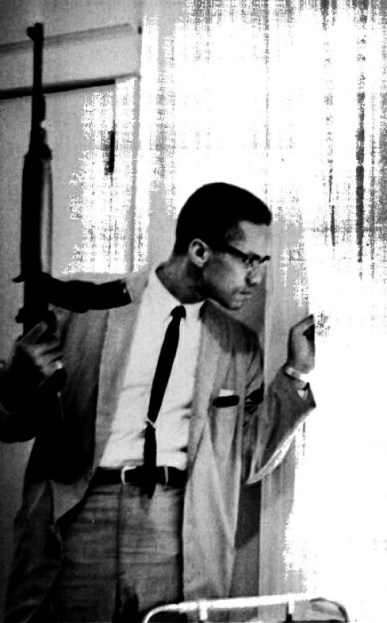
Interestingly the comparisons continue in death. The late twentieth century saw many bear the name radical, as a revolutionary renaissance took hold. Malcolm X and Martin Luther King two leading figures of the period have been given very different legacies in popular culture. Despite not being treated so in life, in death Martin Luther King has been placed within the ‘good black’ category. Hindsight had shown his radicalism to be little more than what is now expected, at least outwardly, of a nation with varying ethnic groups. The ‘dream’ of having children of different races hand in hand is no longer a heady aspiration but has been revealed as little more than good sense in the name of a harmonious society and adherence to principles of common humanity. Yet still, Martin ‘the good’ Luther King has been raised to heights for his foresight, Christian principles, and most importantly his nonviolent methodology.
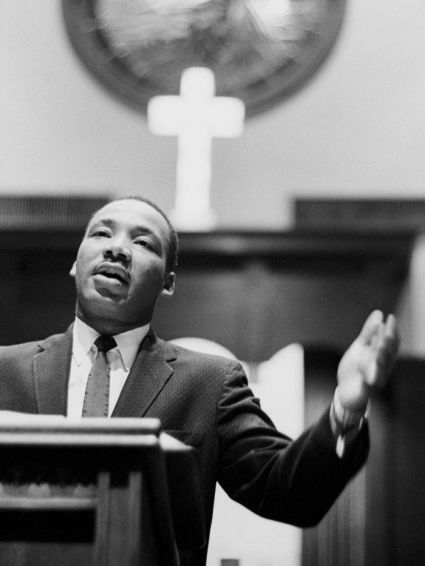
For while King dreamed, Malcolm X concerned himself with the reality of police brutality, and the violence of the forces which opposed African advancement in America and on the continent. The liberation of a people was not to be achieved through tiresome marches, well-crafted speeches, and adherence to the principles of turning the other cheek from corrupting Christendom. A revolution was to be won by meeting oppressive force with zealously wielded force. Little wonder then, revolutionist Malcolm, adherent of Islam, has been placed in the ‘bad black’ category. For as the previous example laid bare, those who attempt to take by force are always on the side of the ‘bad blacks’. Those who appeal to the conscience of vested interest and hope in time they free the oppressed are on the side of the ‘good blacks’.
What this has produced is an endless stream of ambitious men who know well that to wield power they must be ‘good blacks.’ Once propagating revolutionary ideas or advocating, and performing, political acts of violence in order to free the people was considered radical; now having a black spouse and towing the ‘good black’ line is considered praiseworthy. Matters little if the people continue to toil beneath the oppressive weight of an administration in which you serve, or indeed lead; the role of ‘good black’ is too tempting, too rewarding, and too fulfilling for certain men.
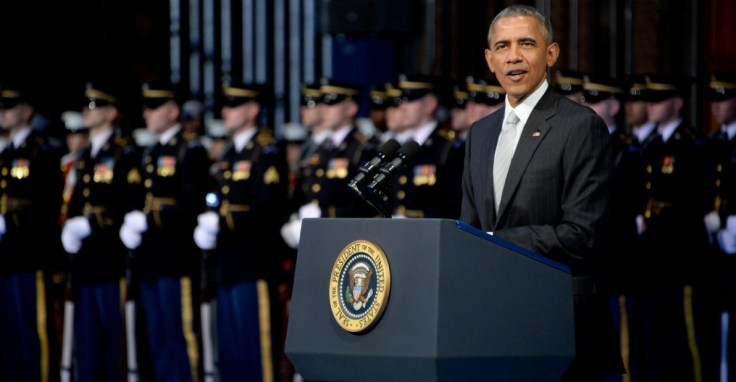
Has the West progressed and now accepts blacks gleefully ‘good’ or ‘bad’? The racial tensions which have escalated into protest, rioting, violence, and murder in America and to a lesser extent in England would suggest not. Furthermore, the presence of people like Barack Obama, Condoleezza Rice, Colin Powell, Chuka Umunna, Sam Gyimah, Adam Afriyie, Kwasi Kwarteng, and David Lammy to name but a fraction, would suggest that there is simply no ‘bad blacks’ left. All that remains is sycophantic ‘good blacks’, barely bothering to veil themselves as ‘bad’.
What becomes of an oppressed people who have no revolutionary leaders?
Cast your eye over the black communities in Europe, the Americas, the Caribbean and Africa; it will not take long to discover the answer.


Leave a Reply