‘Ethiopia thou land of our fathers,
Thou land where the gods love to be,
As storm cloud at night suddenly gathers,
Our armies come rushing to thee’.
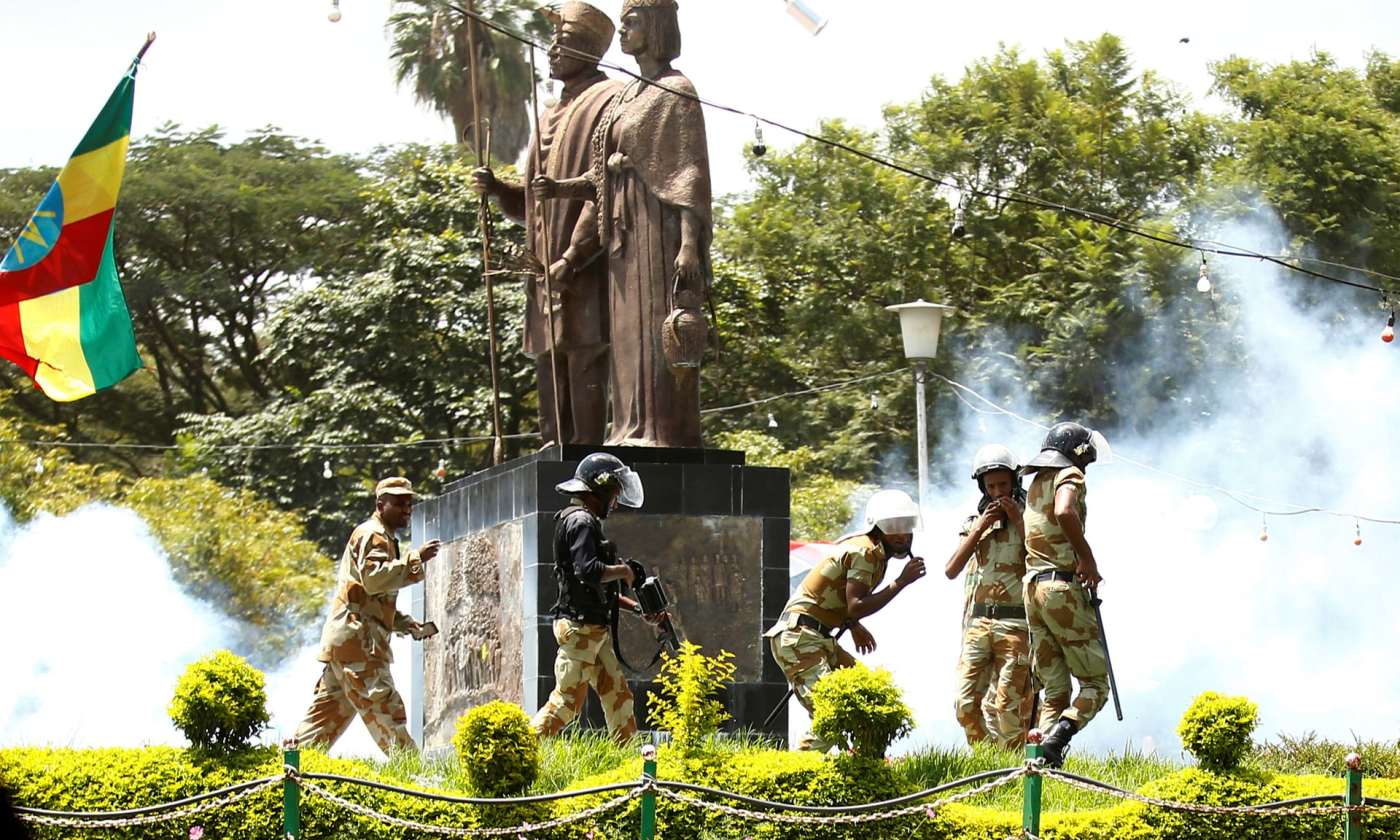
Hailemariam Desalegn, former Prime Minister of Ethiopia, resigned last month, after six years in power. Desalegn had struggled to repress, or appease, the wave of protests over the government’s which has engulf parts of the country since 2015. The unrest was initiated by an urban development plan for the capital, Addis Ababa. As so often, in revolution, the original issue is conjoined with a plethora of other government misdemeanours, and thus jailed politicians, human rights abuses, election rigging, and the lack of media outlets free of government control became grievances which drove the uprising.
The towns of Jimma, Woliso and Legetafo had their roads blocked with boulders by protestors. Banks, schools and markets were closed. Universities have been shut and transport networks disrupted in other areas. People have been displaced from their homes. The ethnic groups which have felt underrepresented, and often oppressed, have risen and ethnic clashes have taken place alongside an uprising with a broadening political agenda.[1] ‘All of the underlying grievances about a lack of political space, a lack of ability to express dissent, came to the forefront,’ according to Felix Horne, researcher at Human Rights Watch.[2]
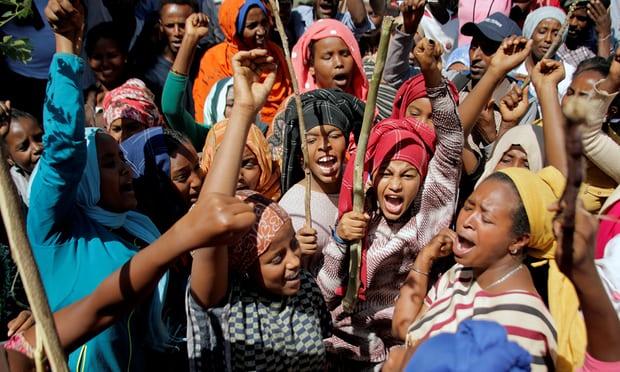
The ethnic federalism, with semi-autonomous regions, was constituted in order to ‘placate the ethnic liberation movements that helped it to power’[3]. Over twenty years later, unsurprisingly, few are placated. The Amhara’s, ethnic group from which the monarchical House of Negus had emanated, claim they have been alienated since the rise of democracy and desire greater representation. However, much of the disturbance has taken place in the Oromia region, home to the Oromo ethnic group which accounts for 34% of 100 million Ethiopian citizens.[4] While the Tigrayan ethnic group account for only 6% of the population, it was they who toppled the Marxist government under Meles Zenawi.[5] Thus, they have remained conspicuous in the corridors of power ever since; represented by the Tigrayan People’s Liberation Front (TPLF) who are one of four members of a ruling coalition. This is a fact which perturbs the Amhara’s and the Oromos who both outnumber them. The Somali Regional State, capitalizing on the chaos, winks and shrugs whilst its local militia, the Liyu, spread terror and death with equal malevolence. Last year, ethnic violence rose to such heights[6] that the government was forced to send troops to quell a situation which concluded with ‘several’ dead Ethiopians. This, regretfully, was not an isolated incident and similar deathly occurrences have been reported.
If you hoped Africa had moved beyond such tiresome travails, you are now mournfully informed that she has not.
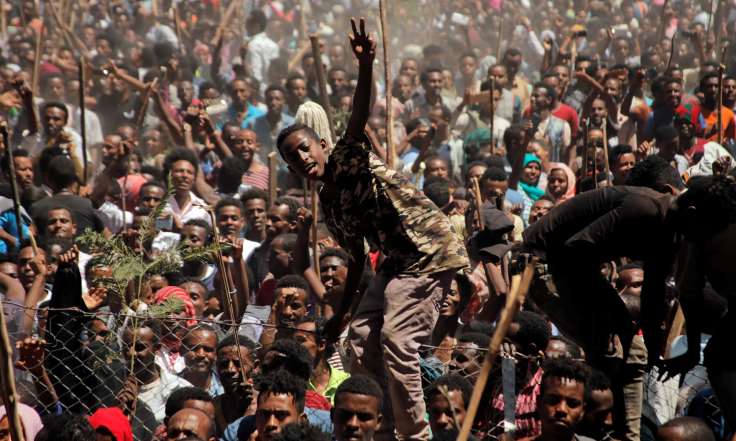
‘If you hear the protesters on the street’, Horne tells us, they are chanting, ‘self-rule for our region, shared rule for Ethiopia’.[7] The regions which were divided based upon ethnic lines, have inevitably become ethnically driven. As the centre crumbles, the edges grow stronger. The Somali Regional State grows covetous and looks threateningly at its regional neighbour’s resources and land. Within Oromia, the largest region, politicians have been propagating ethnic nationalism. The regional politicians have become so emboldened that they have drafted a bill demanding that the Federal Government changes the name of the capital, the language spoken, and the administration.[8] The Qeerroo, an underground movement ‘orchestrating unrest’ in what is being called the Ormoro Movement have assisted in bringing ‘one of the most autocratic governments to its knees’.[9] What is evident to all, save those who hold power in Africa, is that ethnically driven separation, begets further ethnically driven separation.
The government pardoned two thousand political prisoners, as the discontent escalated, and have also been forced to release opposition politician Bekele Gerba after demonstrators organised strikes, blocked roads and staged demonstrations. Secretary-General of the Oromo Federalist Congress (OFC), Gerba was arrested in December 2015 after mass protests broke out in the Oromia region over accusations that farmers were being forced to sell land with little, if any, compensation offered.[10] Gerba credits the Qeerroo with securing his release.
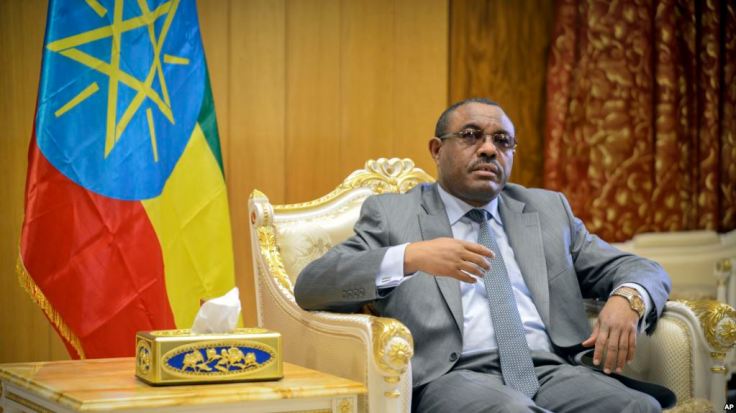
Desalegn said at a press conference, ‘the notorious prison cell that was traditionally called Maekelawi will be closed down and turned into a museum.’[11] This was not enough to save his job, and days after releasing Gerba, he resigned with the intention of his exit being a catalyst for Ethiopian unification. ‘I see my resignation as vital in the bid to carry out reforms that would lead to sustainable peace and democracy.’ If his decision was based upon misguided principles, it certainly wasn’t based upon political reality. His resignation letter was accepted by a ruling party which has had to manage this political crisis, which resignation did not abate, without its prime minister.
The ruling party has just declared another six-month state of emergency, in the knowledge that this uprising shows no sign of stopping.
It is clear then, even to the most ardent Pan-Africanist; contemporary Ethiopia is, at best, a mess.
It is a strange thing, indeed, that in an age when black inhabitants of western nations feel no shame in asking a white majority to portray them as kings in their film productions, those same people evidently feel shame at the mere memory of their allegiance to an actual black monarch. Even more shame is incurred then, with the reality that a monarch no longer reigns and in his place a civilian government presides over a bedraggled populous. As bonds with the ancestral home have receded, hastened by assimilation, old vows of loyalty have been hastily put aside. People no longer consider it en vogue to proclaim loyalty to Ethiopia. Support of the Ethiopian cause, whatever that may be, is no longer a prerequisite to membership of Negrodom. It is evidently no longer de rigueur to be au courant with the goings on in Ethiopia.
And why would it be? How can one, in sound mind, pledge loyalty to poverty-stricken Ethiopia when affluent America asks for your loyalty? What could be foolhardier than a black man born and raised in liberty-loving England believing himself, in some way, connected to black paupers three and a half thousand miles away in repressed Ethiopia? What could be more absurd that to subscribe to the Ethiopian Orthodox Church, with its perverse black imagery, when true Christianity was given directly from the slave masters mouth and the saints and god himself resemble him? What insanity would drive a black man to even contemplate holding in higher esteem the barren lands of Ethiopia when he knows of the lavish cities of France? Which black person is so ungrateful that they could dare withdraw allegiance to benevolent Europe which has clothed, fed, and freed them and switch to regressive Ethiopia which could not and did not do the same?
As brooding storm clouds of discontent gather over Old Ethiopia, bringing with them death, far from armies rushing to her side, it is clear Negrodom no longer cares even to speak the name of the land of their fathers. This intellectual, emotional and political abandonment of Ethiopia is akin to gross dereliction of duty in the midst of war. The punishment for which, history shows, is generally to be court-martialed and sentenced to death. Oh, how we yearn for the past.
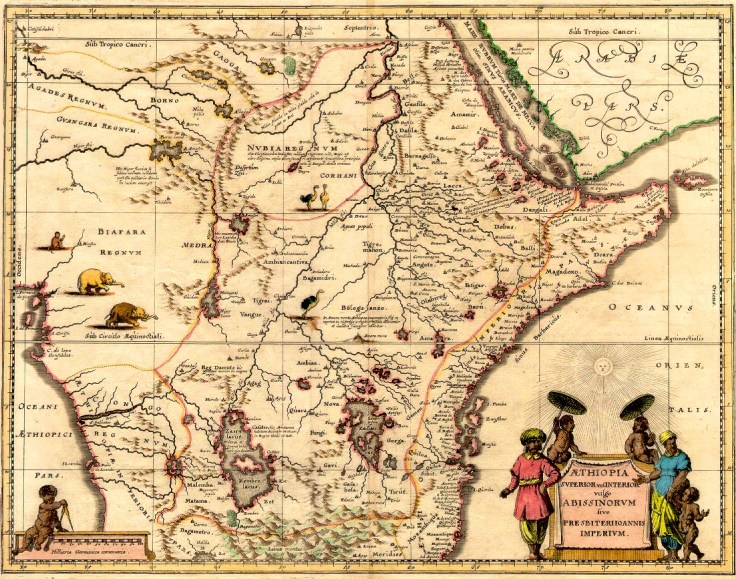
Not long ago, instead of millions of deserters, Negrodom had millions of men, women and children cherished Old Ethiopia and comprehended her significance. In the nineteenth century the black academics, who would influence their predecessors, such as Edward Blyden, J. E. Casely, Fredrick Douglas, and Dr. J. Robert Love all expounded notions of Ethiopian loyalty and African liberation in literature. Alongside the cry of ‘Africa for the Africans’, was the reminder that Ethiopia held a special place in both the history and future of the black race. In a twentieth-century South African church, God was referred to as ‘father of Ethiopia’ and Africa’s oppressed blacks as ‘the downtrodden children of Ethiopia’.[12] The millions of African descendants who had been forcefully converted to Christianity, and their progeny who embraced the spurious word, particularly in North America, took much solace in the following passage: ‘Princes shall come out of Egypt, Ethiopia shall soon stretch her hands unto God’.[13] So abiding was the belief in the passage, and of Ethiopia’s pre-eminence, that at the Sixth International Convention of Negro Peoples of the World, held in Jamaica in 1929, Marcus Garvey asked a delegate ‘You don’t believe there is a literal interpretation to Ethiopia stretching forth her hands to god?’ The delegate answered unequivocally, ‘I do’.[14]
Academics felt both an emotional and intellectual connection to Ethiopia, to such an extent that Professor William Leo Hansberry spent afternoons exploring pictures of ancient Abyssinia.[15] The literary-religious tradition, propagated by English-speaking blacks in the western world, which came to be known as Ethiopianism produced literary, religious and political affirmations of diasporic affiliation with Africa.[16] The classic Ethiopia Unbound, written by J. E. Casely Hayford, is often hailed as the apogee of literary Ethiopianism. All Negrodom was aghast at the Italian invasion. In Harlem, during the Second Ethiopian-Italian war, the Provisional Committee for the Defence of Ethiopia (PCDE) was formed and included numerous African-American race-based organisations.[17]
The relationship was not one way. As African descendants acknowledged Ethiopia as a place with which they had strong ties, so Ethiopia acknowledged its own significance on the diasporic community. In 1922 a message was received, by a convention held by descendants of Africa, from the Ethiopian monarch inviting blacks in the west, with vocational skills, back home.[18] In 1966 His Imperial Majesty Haile Selassie I visited Jamaica, drawing an estimated crowd of a hundred thousand Jamaicans on his arrival. It was, above all, a mutual acknowledgement of the historical importance and contemporary significance of Ethiopia from westernized blacks.
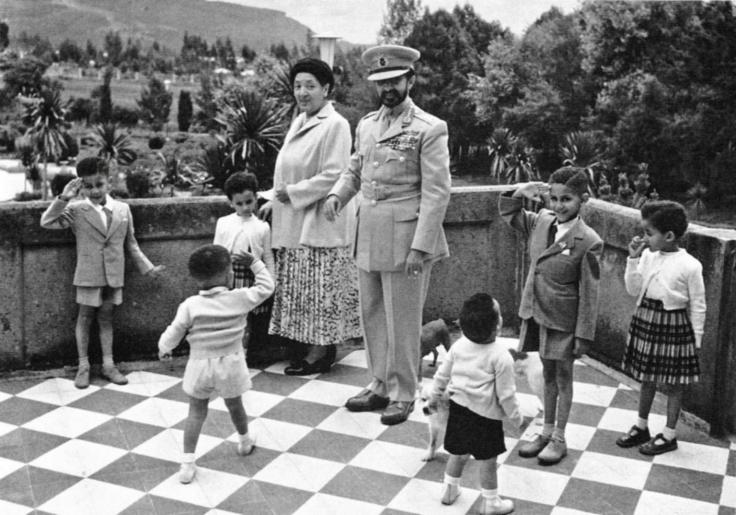
Yet, today Negrodom is as silent as the grave on the troubles of Old Ethiopia. Whilst the senseless cries of ‘wakanda forever!’ echo across the Western world, professions of loyalty to Ethiopia are mute, if existent. In a recent article on the mindless excitement surrounding frivolity, and specifically the Black Panther Movie, political analyst, Nanjala Nyabola wrote: ‘The news of a fictional country resisting colonialism has spread faster and further than the real news of ongoing political turmoil in the only real country in Africa that managed to do so’.[19] This is a repulsive scandal and a source of immense shame, for all Negrodom. Those who do not feel it should be aware that they have induced others, with better sense, to feel ashamed on their behalf.
Let us be clear, this is not a mythical nation, nor one newly created in the age of decolonisation. This is the Ethiopia found in the early Greek and Egyptian sources, already spoken of as an established nation, by Herodotus the ‘father of history’. This is Ethiopia, the first Christian nation, a religion to which millions of black people in the west wholeheartedly subscribe. This is Ethiopia, sole survivor of the Scramble for Africa, the single free nation of a continent brutally ravished and then conquered by Europe. This is the beacon of hope which fought Fascist Italy single-handedly, whose people asphyxiated upon the ancient plains of Ethiopia as gas bombs fell from the skies. This is Ethiopia, which the staid Emperor Selassie aiding in raising to international importance for oppressed Africans and their descendants across the globe. This is the Ethiopia which black people from New York to London, and from Paris to Jamaica, once felt an everlasting allegiance. This is the realm of the House of Negus, whose ancient line stretches back to biblical figures, which governed Ethiopia in its glorious apogee as well as its nadir. This is the Ethiopia which ousted monarchy and instilled a government, based on the much-vaunted egalitarian principles of Communism, as did Castro coeur de lion.
Yet, how many descendants of Africa outside Ethiopia, save a handful of Rastafarians, now feel a special allegiance to Ethiopia?
The quietude is so deafening, if you listen closely, one can almost hear the shame.
[1] (reuters.com, 2018) https://www.reuters.com/article/us-ethiopia-politics-factbox/factbox-ethiopias-main-ethnic-groups-idUSKCN1G01HZ
[2] (Kestler-D’Amours, 2018) https://www.aljazeera.com/news/2018/02/ethiopia-mass-protests-rooted-country-history-180219130441837.html
[3] (economist.com, 2017) https://www.economist.com/news/middle-east-and-africa/21730021-violence-between-ethnic-groups-has-put-country-edge-ethiopias-ethnic
[4] (reuters.com, 2018)
[5] (reuters.com, 2018)
[6] (economist.com, 2017)
[7] (Kestler-D’Amours, 2018)
[8] (economist.com, 2017)
[9] (Gardner, 2018) https://www.theguardian.com/global-development/2018/mar/13/freedom-oromo-activists-qeerroo-ethiopia-standstill
[10] (theguardian.com, 2018) https://www.theguardian.com/world/2018/feb/14/mass-protests-force-ethiopia-to-free-opposition-leader
[11] (Gardner, 2018)
[12] (Martin, Race First: The Ideological and Organizational Struggles of Marcus Garvey and the Universal Negro Improvement Association, 1986) 69
[13] (Martin, 1986) 77
[14] (Martin, 1986) 84
[15] (Martin, 1986)87
[16] (Moses,The Politics of Ethiopianism: W.E.B Du Bois and Literary Black Nationalism, 1975)
[17] (Martin, 1986)255
[18] (Martin, 1986)138
[19] (Nyabola, 2018) https://www.aljazeera.com/indepth/opinion/wakanda-african-180313123713872.html


Leave a Reply