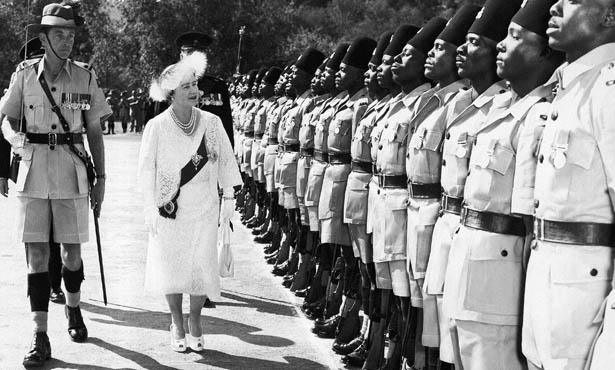
‘What does the black man want?’ Frantz Fanon asked in his famous work ‘Black Skin White Masks’. Ask again, sixty-six years later, and the findings remain as warped and subconsciously perverse as they did over half a century ago. Yet, yesterday’s slavish desires manifest in different ways in today’s world. What today’s black man/woman[1] desires is to reside in a majority white country, as a minority member and to be treated exactly the same as a member of the majority group specifically by the white majority group.[2]
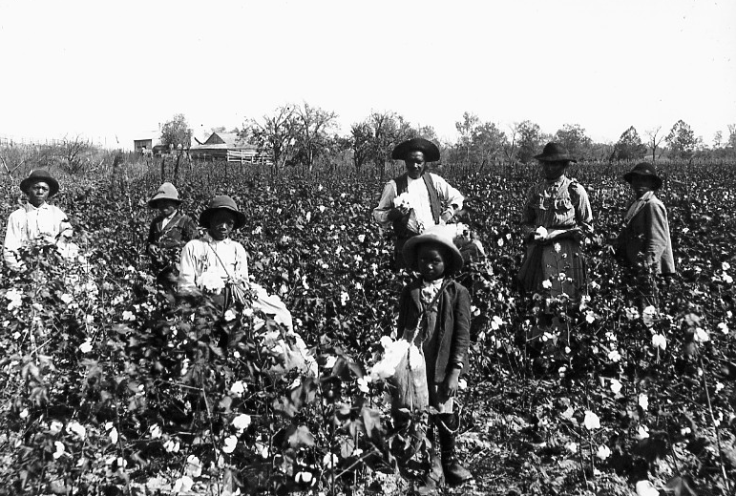
In the historical ‘interactions’ between black race and its white counterpart, there has been the matter of the Three transgressions: Atlantic Slave Trade, Western Bondage, and the European conquest of Africa. All constitute historical episodes which contribute to today’s relationship of inequality between Africa and Europe and thus also the between the descendants of Africa and Europe within the western world. The offspring of the cotton-picking and the sugarcane-cutting slaves never returned home; the lands of bondage became the freed slave’s ‘home’. After emancipation, gradually came enfranchisement, and the illusion and delusions of parity.
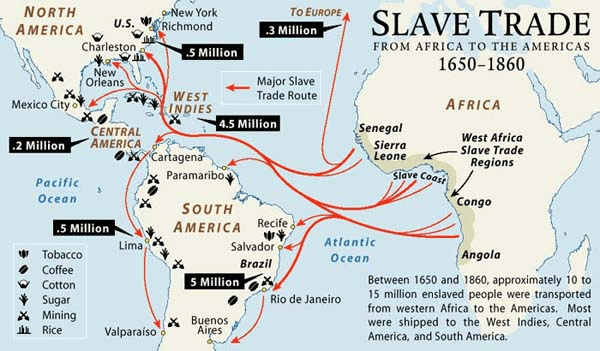
Here we are 185 years after the British ended slavery and 153 years after the Americans added the thirteenth amendment; black and white are equal before the law.
So, if beneath English law a man born in England, with an English name, who speaks the English language, is considered an Englishman; then surely, he is an Englishman? Matters little the colour of his skin, or the language of his ancestors; for contemporary nationality is colourless. So the story goes.
What is left to achieve then?
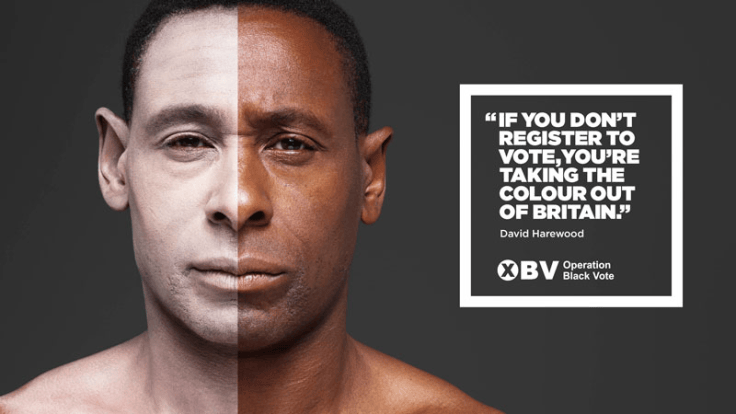
The unceasing calls for ‘greater representation’ inform us with beggarly clarity. More black faces on television, more black voices on the radio, more black politicians in the House of Commons, more black CEO’s in the boardroom, more black women on the silver screen, more black characters in the theatre, more black policemen in leadership positions, more black teachers in schools, more black bobbies on the beat, more black football managers, more black female beauty icons, and so on, and so on, and so endlessly on. In short, take as many as possible from the estimated two million-strong black community[3] and thrust them in positions of public prominence with all haste.
Yet, in this race to the apparent top, the question must be posed: what exactly is being sought at the finish line?
It seems to be a form of social acceptance which when dovetailed with legal equality would give the black man parity with the white. A parity which grants him access to all areas of society as a fully fledged Englishman/woman. To be a recognized and appreciated symbol of English beauty, as is the white English woman. To be considered to have as trustworthy a face as the white person to present the news on mainstream television. To be considered as marketable to lead blockbuster films, as adept at overseeing FTSE 100 companies, as adroit at managing football clubs, as capable at running the police force, and so on, and so on, and so pathetically on.
In short, to inhibit a society in which the black man is recognized as black with a smile, a wink, and open arms; all the while ignoring the fact that he is black and recognizing only his ‘Britishness’. This is no longer a question of the law, but of the mind. What the black man clearly wants is the esteem of his white counterparts, his approval and above all his love.
For he does not say, I am misrepresented on television, I will create my own channel. Or, my image is falsely Europeanized in British magazines, I will refuse to feature in them. Or, the British Film industry is not providing the opportunities I desire, I will create my own film industry. Or the political Parties are underrepresented by black folk leading to a detachment from its black electorate, I will make my own party. Or big businesses are reluctant to hire people who look like me; I will then start my own business and collaborate with other black-owned businesses to circumvent this issue for the next generation.
Though it may make a more tangible difference to the lives of the impoverished black masses than a black James Bond or black Prime Minister; the movie star and politician are more highly prized. To become James Bond as a black man you must be chosen by a white casting director, verified by a white director and of course approved of by a majority white paying public. To become Prime Minister as a black man/woman you must be chosen as a candidate by a majority white party, voted in by a majority white electorate, and accepted by a majority white populous. In both examples, the white verification sought is gained at every step upon the journey to complete acceptance. The actor is a millionaire, utterly detached from the mass of working-class blacks; the Prime Minister an arriviste in the bosom of the political elite completely detached from the mass of working class blacks. Both step into political and societal frameworks which prevent the seamless rise of the black man en masse, adopting the white propriety required in such lofty society. Thus neither can do anything which diverts from the propriety expected of a person in the role. In short, their success does not translate into something politically or socially tangible for the black masses. Their success, in fact, comes at the expense of their individual blackness; a racial quid pro quo.
However, it matters little to a people who hold greater value in approval than in self-made progression. To progress alone, outside the framework of white officialdom, requires a radicalism which will receive no approval from officialdom. To be bereft of that approval, which is so longed for, is unthinkable. The spirit of the masses, who themselves long for the approval showered upon their famed kin, is lifted by the sight of perceived racial progress evidenced by the new level of approval reached. The desire not to disturb the frameworks which consider you unworthy, in your natural form, is an astonishing feat of human folly; particularly when considering the timeframe of this uninterrupted dance. Sits he, English flag in hand, Union Jack woven into his clothes, British Passport a source of unshakable pride. ‘I will not destroy the framework, nor undermine it by creating my own. I will beg, cajole, fight and even die to be a part of the system and eventually, I will achieve my parity. If it can be done with the law, it can surely be done with the mind’.
This is a will-o’-the-wisp of the grandest kind; a slavish fantasy dreamt by a people severely lacking amour propre.
Yet, this is a slavish chimera to which he is forever bound. There can be no escape now. For he is now an Englishman in heart and mind, in law and culture, and thus must have faith in the institutions of his country to deliver him the desires which stir within. There is no longer any other identity, no longer any alternative route, nor any recourse. Fanon says of the adoption of culture that ‘every colonized people-in other words, every people in whose soul an inferiority complex has been created by the by the death and burial of its cultural originality-finds itself face to face with the language of the civilizing nation; that is, with the culture of the mother country. The colonized is elevated in proportion to his adoption of the mother country’s cultural standards. He becomes whiter as he renounces his blackness, his jungle.’[4]
Blackness long perverted, jungle long renounced; his identity is now that of the Englishman, his culture that of the Englishman, and thus his destiny that of the Englishman. Yet, while he remains a minority Briton, of little economic significance, working-class origin and dusky skin; he shall have to appeal to the hearts of his whiter countrymen to be granted access to aspects of British life from which he is now excluded. Evidently, this is not an issue for millions, on both sides of the Atlantic, who have become accustomed to political, and social scavenging. There is no end in sight, it has already been 185 years of hoping, waiting for that which may never arrive, pleading for better, hailing the vulgarian and celebrating the crumbs of reform.
Saddle up, the race to the top (or the bottom) has no end in sight.
[1] Henceforth ‘man’ will denote both the male and female perspective.
[2] For the psychoanalytical perspectives on why, see Frantz Fanon Black Skin White Masks
[3] (ONS, 2015) (992,000 Black/African/Caribbean/Black British)
[4] (Fanon, 2008) pp9


A Well written piece.
LikeLike