
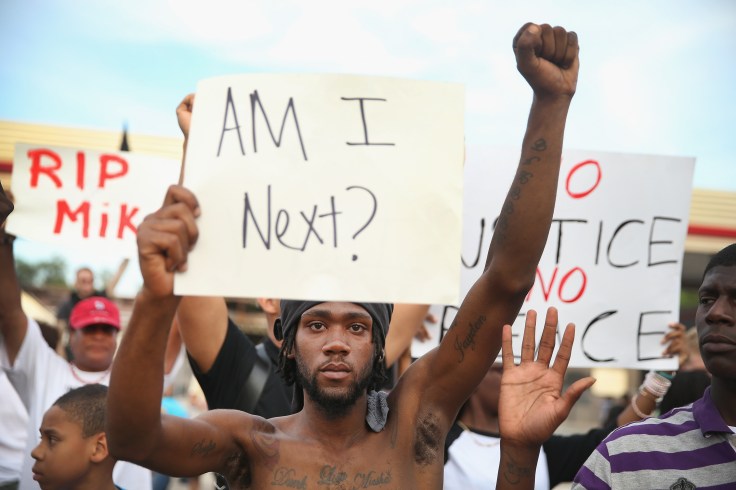
What more can be said? What more information can be given here that the black community does not already know? What words can possibly be written which will soothe the hearts of those who mourn their dead? How much more anger can be expressed at a racist police force, biased judiciary, or emotionless politicians? How many more marches, protests, rallies and funerals will we be forced to attend? How many more tears are to be shed, by weeping mothers and fathers, before we say this is really it; it gets no better?
With 223 black people killed by the police force in America in 2017, following the 233 of 2016 and 259 in 2015[1] (whilst a mixed-race president was in office); what can we expect from 2018 and all following years but more of the same. For it shall get no better. Despite all the tears, the marches, the outrage, the apologies, and the false promises which follow; the reality is that the black man and woman have long been, and still evidently are seen as a threat. One which must be civilised, policed, or killed. Unfortunately, for the black community, all three strategies are enforced at once.
The Independent Police Complaints Commission, now the Independent Office for Police Conduct, expressed their ‘concern’ at the disproportional number of black people killed in police custody. The Chair of the IPCC, Anne Owers Dame Commander of the British Empire[2] stated that “We need to look closely between the relationship between ethnicity and the use of force,”[3] after it was revealed that “Of those (eleven who died in police custody), five men were black or mixed race, one was a black woman and the remainder were white.”[4]
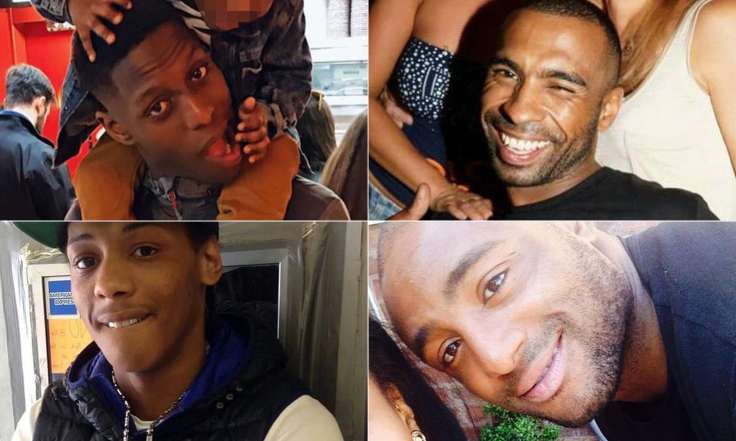
Those who seek to improve these figures, and the society which produces them, will say the search for answers has intensified. But we have all seen this elaborate and deceitful play before. Report, after report, is commissioned. Investigations are launched. Criminal proceeding are begun (then quietly dropped). Politicians, particularly the ones with darker skin, express their disbelief at the type of world we live in and pledge to fight to improve it. Police commanders are issued new directives. Everyone feels better about themselves (save the grieving families of course) and society goes merrily on until next year’s figures are released.
On with the murderous dance.
Why? Because, as the imperial dame stated, ‘the stereotyping of young Black men as ‘dangerous, violent and volatile’ is a longstanding trope that is ingrained in the minds of many in our society.’[5] Ingrained in the minds of many is quite a damning statement, and given the British proclivity for understatement, we may translate that as ingrained in the minds of most. To reside in a country, as a minority and be considered ‘dangerous, violent, and volatile’ by a majority group who have a long history of displaying those same characteristics is a dangerous combination. The number of dead on the other side of the Atlantic is testament to that fact.
The black community has attempted to change the opinions of those who consider them dangerous, none can doubt that. It has become anglicised, speaks the English language, goes to state schools and colleges, finds a job, goes to football, watches (and acts in) national soaps operas, drinks in pubs, contributes to, is influenced by and influences national culture, and raises a family who is by definition English. The black community has every right to stop, and ask; what else can I do? Why is it that ‘people who identify themselves as Black or Black British are over-represented amongst arrests for notifiable offences compared with the general population.’[6]
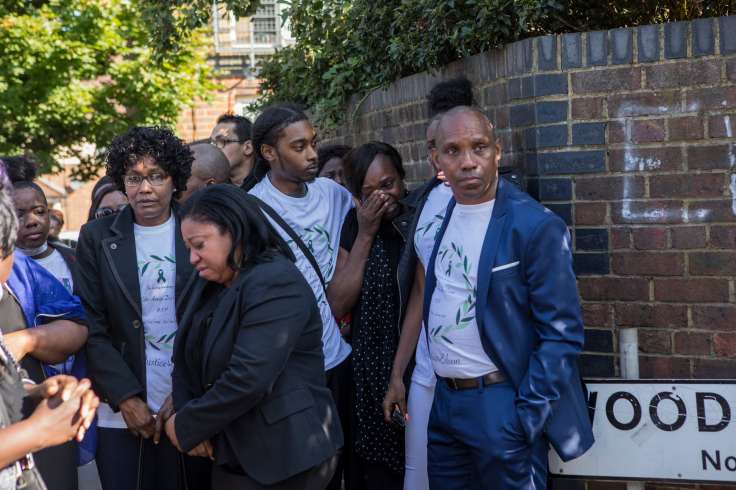
The colonial vestiges never seem to die, somehow surviving amidst all the talk of progression, equality, and assimilation. Their perverse ideas and stereotypical notions seem to linger threateningly, pervading society and its institutions; ever contagious and thus, ever-present.
The report stated that ‘It is not uncommon to hear comments from police officers about a young Black man having ‘superhuman strength’ or being ‘impervious to pain’ and, often wholly inaccurately, as the ‘biggest man I have ever encountered’.[7]
It is clear that the remnants of colonial thinking continue to linger in the subconscious. A ‘constellation of postulates’, as Fanon called it, rendering the Negro ‘a stimulus to anxiety’. Black people are still viewed through imperial lenses; not by entire populous, but enough for old ideologies to endure. A hatred for the black man, a Victorian commentator pronounced, was ‘characteristic of almost all Anglo-Saxons’.[8] Such powerfully articulated, widely accepted, and all-encompassing ideas do not slip quickly and quietly from collective memory. Thus, the notion of the black savage as a giant animalistic specimen, bulging eyes, muscular apish body, repulsively dusky skin, abnormally sized penis, inconceivable strength, graced with a treacherous heart, and ungovernable mind has survived. Then, as now, the black man is an untrustworthy and dangerous subject.
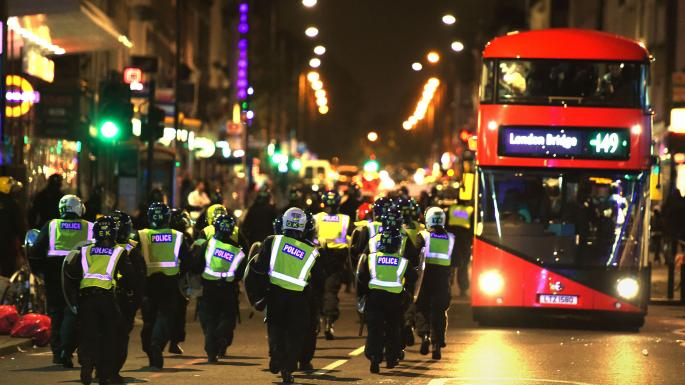
The release of statistics showing a rise in violent crime in England has been accompanied by societal outrage and a knowing nod toward the usual suspects. Almost instantly the debate centres around whether more ‘stop and search’ can halt this violence; all the while knowing that stop and search impacts the black community more than any other. Black people are eight times more likely to be stop and searched than their white counterparts.[9] Thus, when we read between the lines of the rhetoric, what is really being said is, what has always been thought, ‘intensify the police pressure on the black community and crime will fall’. Politicians, white and black, have already begun making television appearances; most calling for an escalation of hands on policing.
The dust has yet to settle since the release of the figures and the Mayor Sadiq Khan has already ‘vowed’ to respond with a ‘significant’ increase of stop and search tactics in his city.[10] The Metropolitan Police Commissioner Cressida Dick, despite presiding over a cash-strapped police service, already knows ‘exactly’ what she would do with any extra funds and resources.[11] Woe to the black community, then, if ever she receives it. Indignant politicians bay for the blood of the Prime Minister. ‘Reckless Tory cuts’, warned the Shadow Policing Minister Louise Haigh, have ‘risked public safety.’[12] Just as Tennyson warned the then Prime Minister William Gladstone, so Mrs May is being warned; ‘we are too tender to our savages’, allow us to oppress the blacks; for remember always ‘niggers are tigers, niggers are tigers.’[13] Where in the nineteenth century they were the ‘sable mob’ which ‘revelled in blood’[14], in the twenty-first they are the ‘terrifying gang’ which ‘blights’ the capital[15]; still black, still dangerous, still need to be killed for order to reign.
Returning to the report; it acknowledges that the black community resents playing the role of the giant savage, with all its perverse connotations and undeserving consequences. “Deaths of people from BAME communities, in particular young black men, resonate with the black community’s experience of systemic racism, and reflect wider concerns about discriminatory over-policing, stop and search, and criminalisation.”[16] In 2018 the black community are still forced to ask the questions their ancestors did: why don’t they like us? Now, as then, the answers they receive shall not be to their liking.
Yet, the white community begin to ask themselves, again, in their own pursuit of societal excellence: why don’t we like them? Why are our institutions biased against them? How can we solve it? The section on race, in the imperial dame’s report, ends with nine recommendations about what the police force should do. ‘Training should take the form of a two-way dialogue allowing officers to hear the experiences of people from BAME backgrounds and include participation of bereaved families. Police training should include an understanding of institutional racism, the Macpherson report, the social context of Black deaths in custody and the impact they have had on public confidence.’[17] A ‘two-way dialogue’; presumably where black people prove to officers that they are not truly savages, but bereaved humans tired of persecution. Followed by an attempt to grasp the intricacies of institutional racism with a read through the review of Stephen Lawrence’s death; concluded by a pow-wow about the social context of black death. This is so far beyond laughable, it’s almost an English farce. If this is the best answer to the psychological perversion of the ‘many’, societal oppression of black folk, and institutional racism of western institutions that can be found then call off the inquiry, begin hiring the grave diggers and wait for the hastily arriving black dead.
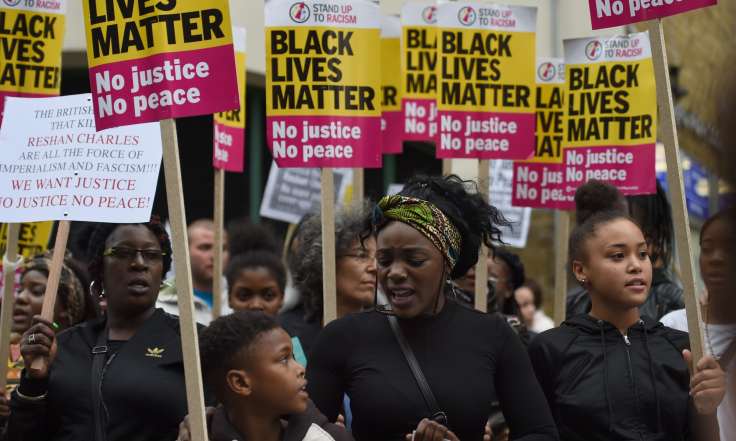
This writer has written before about the black pursuit of white love, and its useless folly. The pursuit of sympathy, in order to halt police brutality, is another grand fantasy. Racial stereotyping, bequeathed to the ages by empire, cannot be undone in a generation, nor in a century, nor evidently in five centuries. The collective national memory, and its archaic institutions, remembers well that the black person was a volatile and dangerous savage thirty years ago, a hundred years ago, and five hundred years ago. The concepts, notions, and indeed perceived facts about the black man/woman which were woven into the national fabrics of Europe and the Americas cannot simply dissipate. They are as enduring as the institutions which uphold their memory.
Just as many a black man still believes that he is sexually gifted in comparison to the white man, so many a white man still believes the black man is more wild and dangerous than any other. These colonial vestiges have endured, and evolved because people continue to believe them. No amount of marching, tears, words, convictions, or training courses can change that. How do you change a people from seeing you as ‘dangerous, violent, and volatile’ when those who believe it found the ideas wrapped in hundreds of years of verifiable memories? The foremost authorities search for answer, none yet has been found.
Woe to the black man.
[1] (The Washington Post, 2018)
[2] DBE
[3] (Dodd, The Guardian , 2018)
[4] (Dodd, The Guardian , 2018)
[5] (QC, 2017 )
[6] (Roe, 2017)
[7] (QC, 2017 ) 88
[8] (The Decline and Fall of the British Empire Piers Brendon, 2008) 149
[9] (The Guardian , 2017)
[10] (The Guardian , 2018)
[11] (The Guardian , 2017)
[12] (The Daily Mail , 2018 )
[13] (Brendon, 2008) 149
[14] (Brendon, 2008)149
[15] (The Evening Standard , 2012)
[16] (QC, 2017 ) 93
[17] (QC, 2017 ) 93


Leave a Reply