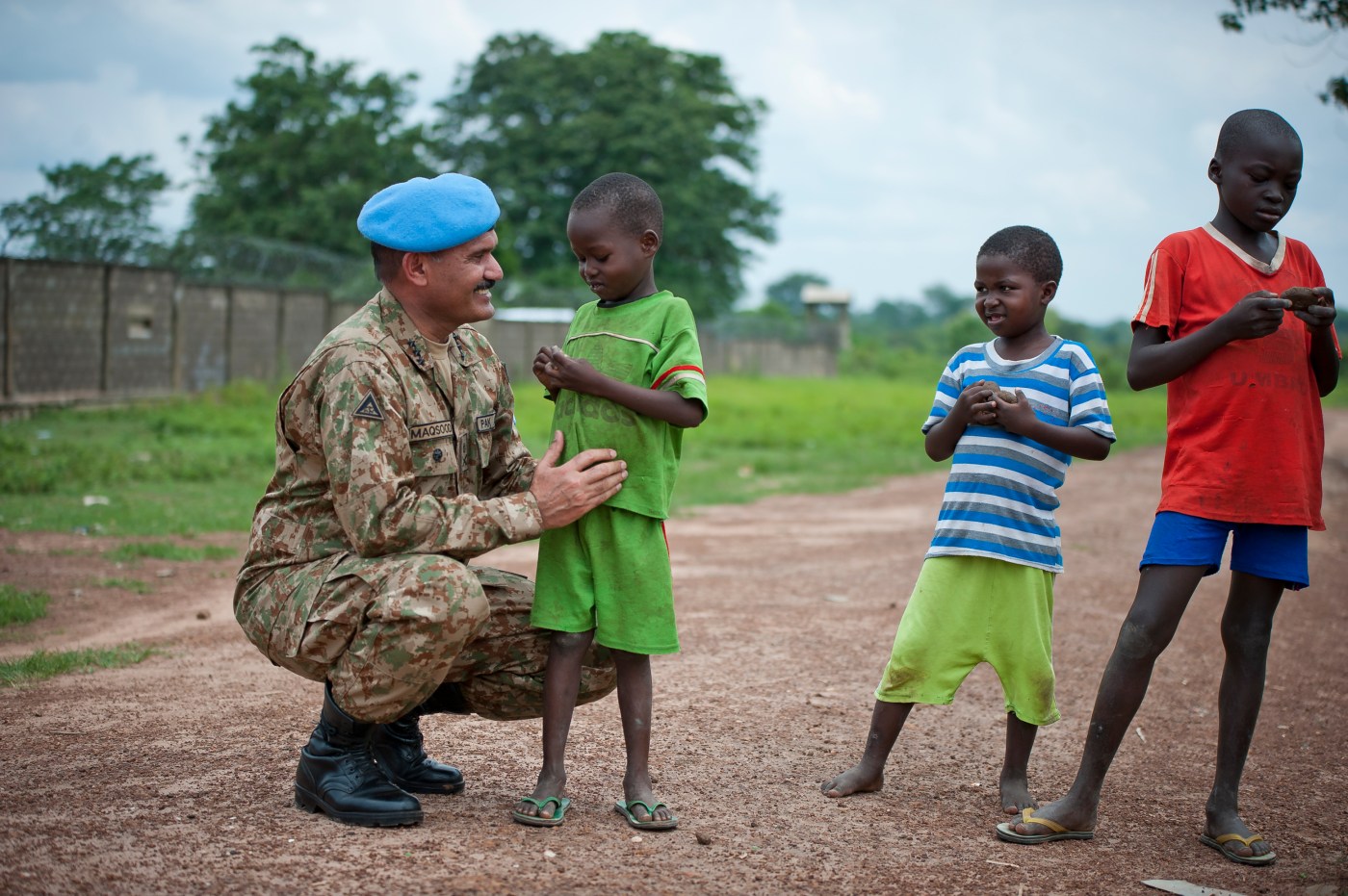
There is no need for gaudy rhetoric, or embellished truths; in this matter the facts are clear. UN soldiers sent to Africa to bring peace, and stability are instead abusing their authority to rape women, men, and generally children.[1] This may come as a shock to many who have heard of the travails of Hollywood actresses, British Parliamentarians, Trump associates, adolescent athletes, theatre boys, and whomever else’s pain has morphed into hashtag movements. Yet, it has been almost a year since UN Secretary-General António Guterres was forced to outline a ‘new victim-centred approach to prevent and respond to such abuses committed by those serving under the UN flag.’[2] Let us be absolutely clear, once more; the ‘abuses’ the United Nations is forced to respond to is the rape of black men, women, and children by its ‘peacekeepers’.
“I fully recognise that no magic wand exists to end the problem’’[3] says UN Secretary-General António Guterres. Raping black women and children has become so ingrained as a normality amongst certain groups and institutions that it is seen as impossible to stop. It’s hard to recall a century when the servants of overbearing western institutions were not raping Africans. In the twentieth century, the Congo was host to Belgians who did not leave until they had enslaved, mutilated, and raped the populous. In the nineteenth century, the servants of the British Empire forced themselves upon black women from the Indies to Cape. From the eighteenth onward the ever-debauched French forced themselves upon black women from Martinique to Algiers, and from Guiana to Senegal. In the seventeenth century, as the ships crossed the oceans, tearing child from mother, women from the Gold Coast to the Congo were abused upon the ships that would take them to bondage. When they arrived, they would discover that the rape had only just begun. The Portuguese had a presence in Africa in the sixteenth century, who can doubt that they defiled the women even then? Matters little, it is the twenty-first; over to the United Nations, and so the rapist baton is passed on and on.
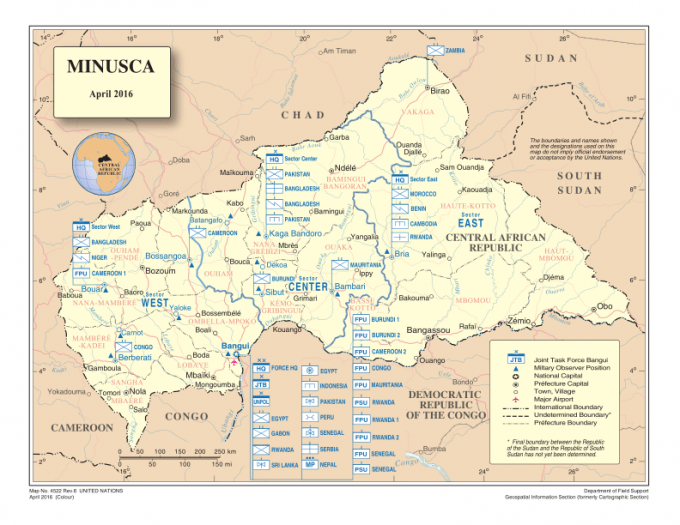
More cases of rape by peacekeepers have occurred in the Democratic Republic of Congo, the Central African Republic, Haiti, Liberia, South Sudan and Ivory Coast than in all other UN missions combined. Marsha Henry, Deputy Director of the Centre for Women, Peace and Security at the London School of Economics, remarked that there is ‘always an element of racism’ involved ‘in these contexts’[4]. The use of the word ‘always’, and the phrase ‘in these contexts’ are significant. For the always describes the historical time-frame, of the abuse suffered in the relationship of disproportionate power, which occurs ‘in these contexts’.
In short, when the worker of a powerful European institution comes into contact with the subject of a weak African government he assumes the disproportionate power of the institution and is able to wield it over the powerless African subject. The peacekeeper, Fanonian theory shows us, becomes the embodiment of Europe; powerful, benevolent and dangerous. His power is projected through the institution of the UN itself. Benevolence renders him the philanthropist, not the pitiful receiver of charity and protection; that he is dangerous is remembered well, reinforced by the arms he carries, and confirmed by the organisation he represents. Although the variables have shifted, slightly, the components in a relationship of unequal power remain the same. As the African woman was raped in the eighteenth, nineteenth, and twentieth century, so she is raped now. What has altered in the power structure which could change this conclusion?
The governments of the nations which these ‘peacekeepers’ enter are weak, if governments at all. They can do little to enforce their own will on the country as a whole, let alone the upon the United Nations. The regions these ‘peacekeepers’ enter are often ravaged by war, stricken with poverty, and bereft of government authority. Thus, the UN’s well-armed, and well-supplied soldiers often become the highest authority in a region. However, the men hired by the overbearing institutions are not solely white European, bequeathed racist ideologies. The UN ‘peacekeepers’ are made up of men from nations across the globe. Indians, Chinese, Indonesians, Pakistani’s, Nepalese, Uruguayans, and Brazilians are all represented in the top twenty-five contributors to the peacekeeping missions.[5] The Europeans, of course, are still represented by the French, English, Spanish and Baltic nations amongst others.
It is the presence of African soldiers which is most disturbing. Ethiopia, Rwanda, Ghana, Senegal, Burkina Faso, Egypt, Chad, Morocco, Benin, Cameroon, Kenya, South Africa, Togo, Niger, Nigeria, and Tanzania are all astonishingly in the top twenty-five contributors.[6] The ‘rampant’[7] rape is not perpetrated by white men alone; men of Asia and Africa, clothed in the western power of the UN, are unashamedly defiling the women of Africa. History has shown how men of colour are able to step into role’s traditionally reserved for racist white men and adopt the persona with a gusto that evades even the original perpetrator. It is, in fact, a role which is highly desired by particular men and is accompanied by a plethora of extras which the particular male is often bereft of when outside of the white role. Yet, the moment they are able they to step into the framework of oppression they do with a conscious viciousness which is deeply disturbing and utterly contemptible. Such is the way of the psychologically conquered.
Reports of rape have emanated from The Democratic Republic of Congo, Somalia, Mozambique, Eritrea, Sierra Leone, and Liberia; in short, everywhere UN soldiers have been in Africa. Such is the scale of rape in the UN’s ranks that in 2003, incumbent UN Secretary-General Kofi Annan was forced to issue a ‘zero-tolerance policy’ on rape. Himself a Ghanaian, Kofi Anan must surely have questioned his place in such an organisation. The Associated Press revealed, after an investigation, that between 2004 and 2016, almost 2,000 allegations of sexual abuse were made against UN peacekeepers.’[8] Although these figures may seem high, we must factor in the distinct likelihood that they are massaged, and the real figures are in fact significantly higher. After all, until the report was leaked, the UN was loathed to even admit there was a problem at all. They suppressed the findings that eleven Frenchmen, three men from Chad and two from Equatorial Guinea had sexually abused Africans. Anders Kompass, former director of field operations at the UN human rights office in Geneva, leaked the report to French authorities. The allegations of the rape of thirteen children included the sodomy of boys ranging in age from nine to thirteen.[9] The UN, as secretive as the Roman Catholic Church, as protective of its rapists as Rome, denounced Kompass and placed him under investigation.
In August 2015, after the rape of a twelve-year-old girl, a teenager and his father, Amnesty International implicated MINUSCA soldiers.[10] United Nations Secretary-General Ban Ki-moon was forced to ask for the resignation of the head of the United Nations Multidimensional Integrated Stabilization Mission in the Central African Republic (MINUSCA). In the first three months of 2017, five ‘peacekeepers’ were accused of sexual abuse; including a Romanian military observer who fathered a child, with an under-aged African girl, and was suspended.[11] ‘The United Nations is raping children’[12], an article in The Independent stated. With reports of ‘peacekeepers’ offering children cookies, in return for access to their genitalia and in exchange for their innocence, we must wonder what lies beneath when ‘even the UN recognises that this is the tip of the iceberg.’[13]
“Let us declare in one voice: We will not tolerate anyone committing or condoning sexual exploitation and abuse. We will not let anyone cover up these crimes with the UN flag,”[14] stated Mr Guterres. The problem with the ‘one voice’ is that it is not African. Where is the African Union? Where are the politicians of the African nations mentioned? The activists? The human rights lawyers? The police? The community workers? Where is African law, when its women and children need protection? Now, as far too often, the answer is shamefully: nowhere to be found. ‘When it comes to the UN, justice is extremely rare,’[15] stated Beatrice Lindstrom, a lawyer with the Institute for Justice and Democracy in Haiti. Evidently, justice will not be provided by the Africa Union, nor by national authorities; and never, by the United Nations.
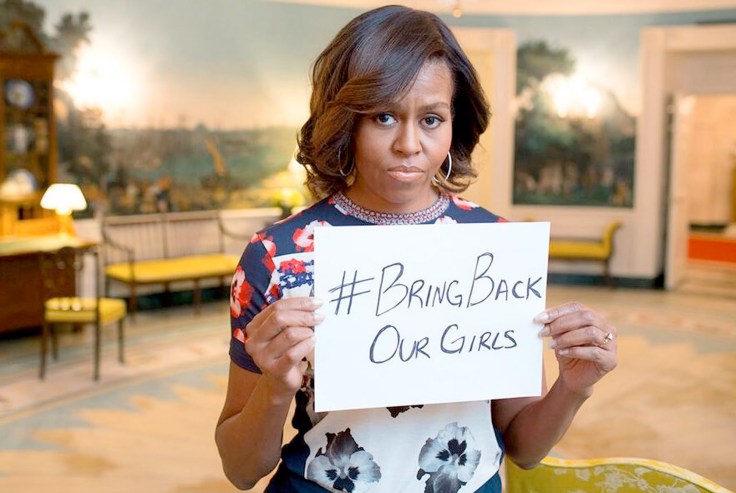
Who then, can the violated of Africa look to for justice? I ask this in a week where Oxfam workers are exposed bedding black prostitutes in Haiti and Chad.[16] Time itself has proven that neither their governments, nor their judiciaries, nor the quasi-benevolent institutions of the west have the ability or desire to protect the vulnerable. So accepted is this fact that in a year of Harvey Weinstein and #Metoo, Larry Nassar and the hundredth anniversary of semi-enfranchisement, not a word has been said of the raped women and children of Africa. When African girls were taken by Muslim terrorists, it fit the western narrative to speak publicly and proclaim boldly ‘bring back our girls’; when African girls are raped by men wearing UN uniforms, ceaselessly, not a mumbling word is uttered.
Shall we just wait then, in indifferent silence, until the institutions of the west locate the ‘magic wand’ which will bring to an end their unceasing rape of Africans?
[1] (MacLeod, 2017)
[2] (United Nations, 2017)
[3] (United Nations, 2017)
[4] (Essa, 2017)
[5] (Nations, 2016)
[6] (United Nations, 2017)
[9] (Essa, 2017)
[10] (sputniknews, 2015)
[11] (BBC, 2017)
[12] (MacLeod, 2017)
[13] (MacLeod, 2017)
[14] (United Nations, 2017)
[15] (Essa, 2017)
[16] (Quinn, 2018)

