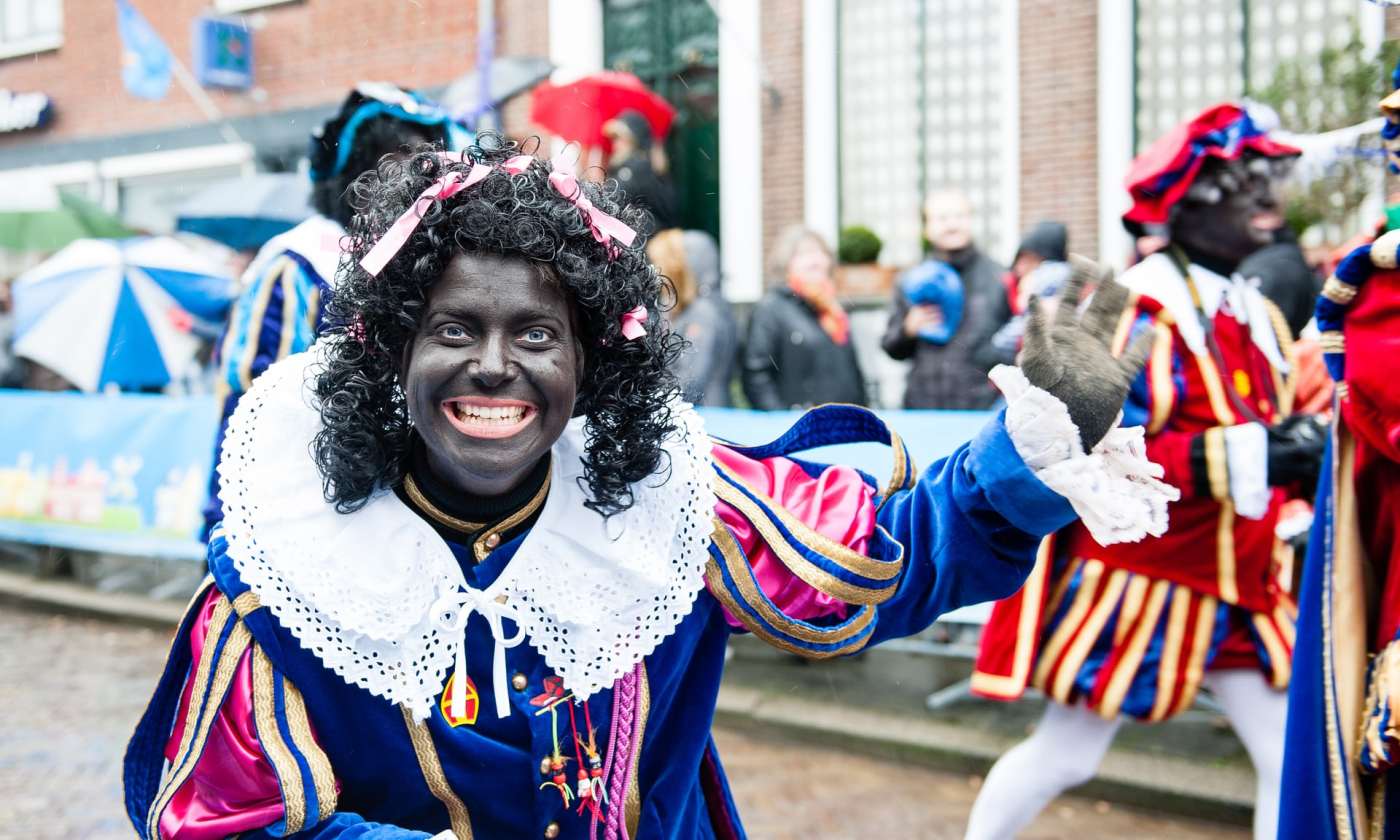
Nikolaos of Myra was a fourth-century Christian, apparently, imprisoned by Emperor Diocletian and freed by his successor Constantine the Great. Though no contemporary documentary evidence exists, as with all tales in the Christian religion, it is said that he attended the Council of Nicaea and became bishop of Myra. In death, he was worshipped throughout Europe and was transported to America by Dutch colonists where he became Santa Claus in place of the Dutch Sinterklaas (a variant of St Nicholas). The nineteenth century Americans would transform an old saint into Father Christmas; and the rest, as they say, is history.
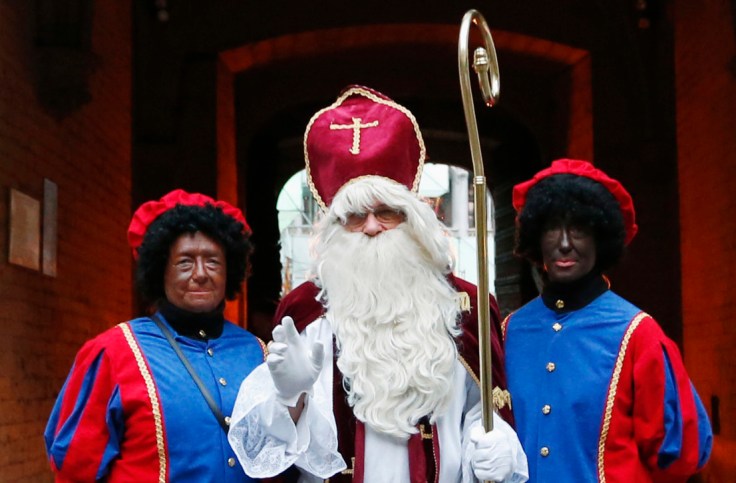
The saints all have stories of the munificence and magnificence they displayed in life and St Nicholas is no different, with a plethora of stories regarding his generosity. Yet, of the many tales which surround the saint, none survive of him giving paint to people in order to blacken their faces. This is exceeding curious as there is an annual event held in Amsterdam to celebrate St Nicholas. One of Santa’s ‘helpers’ in particular is reincarnated at this festival by the citizens of Amsterdam: Zwarte Piet; alias, Black Pete.
Black Peter rides with Santa and checks the behaviour of children, handing out treats to the good, and presumably black paint to the bad. For every 6th of December, the white citizens of Amsterdam get up in the morning, put on costumes, paint their faces black and walk unashamedly around the city.
Why, one may reasonably ask?
Quite simply because, as history shows, many Europeans clearly get perverse pleasure from painting their faces black.
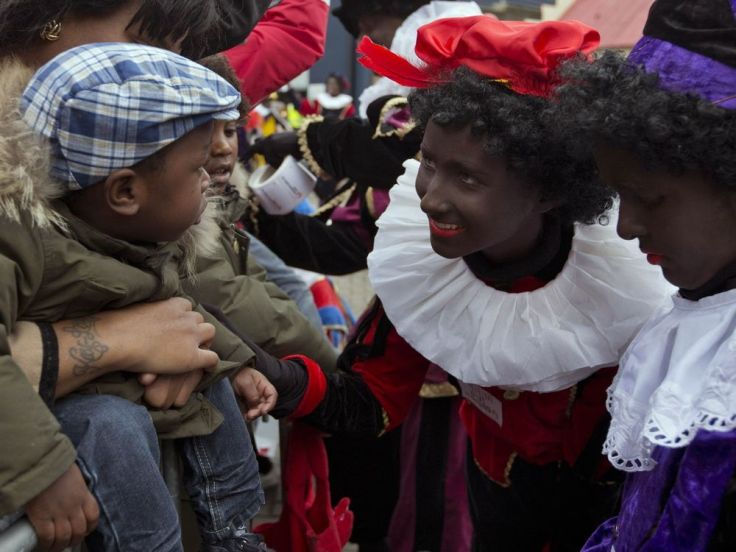
Given the 9,000 kilometres the Dutch sailed to the Cape, without an invitation in 1658, it is clear they have long had an obsession with black faces. Lest we forget white ‘south Africans’ are, after all, Dutch descendants with a tan; and none needs reminding of the obsessive hate that the invaders of South Africa have for Africans. This did little to stop them raping African women, however, nor stop many having them as paramours.
Here lies the paradox, somewhere between loathing and obsession. It is said this is an act of racism. Let us be honest and admit that whether the black populace are there or not is irrelevant to the white populous. There would still be white Dutch citizens which painted their face black, every year if the citizenry was 100% white. This is driven by internal not external forces.
It is surely an act of perverse racial degradation and indeed racial confusion.
But does it cause any actual harm to the people it purports to represent? What are the physical consequences of a few hundred mooncalves painting their faces brown and looking ridiculous in the street? Do the people who painted their faces go on racist rampages through the town after the festival? No. Do they wash off the paint, find a few people who can’t, and begin hanging them from trees? No. Do they howl racially insensitive remarks as they parade through the streets? No. Do they paint their faces black at work the next day and oppress the black workforce? No.
The trauma in inflicted is not physical then. Surely black communities in the west have more pressing concerns than face paint.
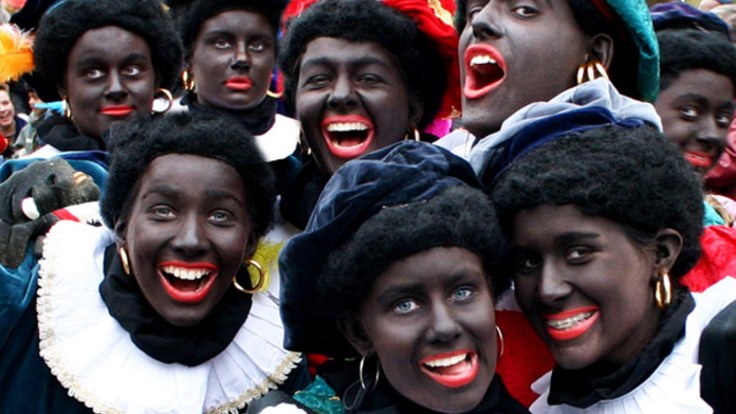
Yet, mockery leads to the loathing of that which is denigrated and antipathy often translates to hate. It is a reminder of a time when black people were portrayed as little more than simple savages. Black Citizens of Amsterdam complain of heightened racial tensions around St Nicholas’ Day and children subjected to increased racial scrutiny from their peers. A miasma of colonial vestiges hangs over all Amsterdam as the black-faced whites descend upon the city; resurrecting the sorrowful days of colonial Orange. The racial undertones which undermined generation after generation begin to rear their ugly head once more and in 2017 violent clashes overshadowed the celebrations. Those who attempted to peacefully protest about the ‘vestige of slavery’[1] were met by members of the Dutch right who halted buses full of demonstrators. Members of the ‘Action group for the preservation of Zwarte Piet’ forcefully entered a primary school, which celebrates the festival without Black Pete, with blackened faces and distributed flyers and stickers. The Flemish Minister for Culture, Sven Gatz, blackened his face for the Christmas celebration in 2015 and posted a picture of himself with the caption “and we sing and we jump and we are so happy, because there are no naughty children.”[2]
Presumably, everyone is still ‘so happy’ as its 2018 and he retains his post as Minister for Culture. To have government ministers advocate an act the black section of the populace protests against, specifically on the grounds of racism, is particularly worrying for a black community in the west. If the Minister for Culture concurs that black-face is an immovable cultural component, of a country which black people claim as their own, a dangerous paradox lies at the heart of the relationship between the state and black people.
If the trauma is not physical, it certainly impacts many psychologically.
In his defence, the Minister for culture casually brushed off the allegations of racism with the usual nonchalance those who paint their faces always exude. He has been ‘Engaged against racism all my (political) life’, Gatz claimed without a hint of irony, ‘And now I’m an ordinary racist because I coloured my face dark. Come on.’[3] The words may alter slightly, but the retort is always the same ‘it’s just a bit of harmless fun; why don’t you blacks lighten up.’ A survey was conducted in 2017, consulting the Dutch municipalities on whether Black Pete should continue to be celebrated in light of the racial connotations. Of the 272 municipalities asked, 239 said they would continue to celebrate Black Pete in the ‘traditional’ manner; in short, by blackening white faces. And so, we return to the original point. The Flemish minister, the right-wingers, and the thousands and thousands of others who engage in this idiocy find pleasure from doing so and no amount of protests can render that perverse pleasure obsolete.
What a thing then, to reside in scornful Europe as a black person.
[1] (Boffey, 2017) https://www.theguardian.com/world/2017/nov/28/black-pete-extreme-right-appears-to-stoke-dutch-divisions
[2] (Khomami, 2015) https://www.theguardian.com/world/2015/dec/07/belgian-minister-sven-gatz-rejects-racism-accusations-blacking-up
[3] (Khomami, 2015) https://www.theguardian.com/world/2015/dec/07/belgian-minister-sven-gatz-rejects-racism-accusations-blacking-up


Leave a Reply