‘…The Egyptian civilisation was fundamentally African and the African element was stronger in the Old and Middle Kingdoms…
Many of the most powerful Egyptian dynasties which were based in Upper Egypt – the 1st, 11th, 12th and 18th – were made up of pharaohs whom one can usefully call black.’
Martin Bernal
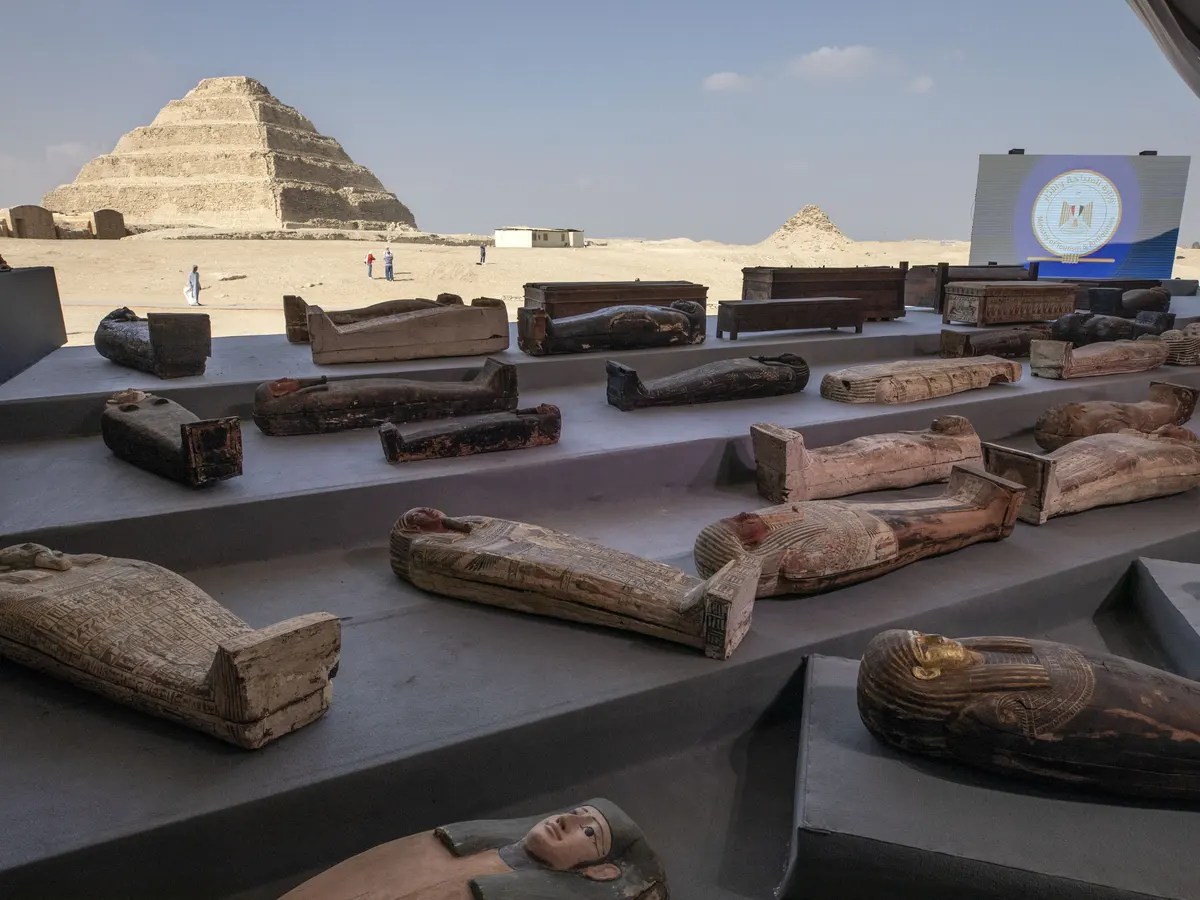
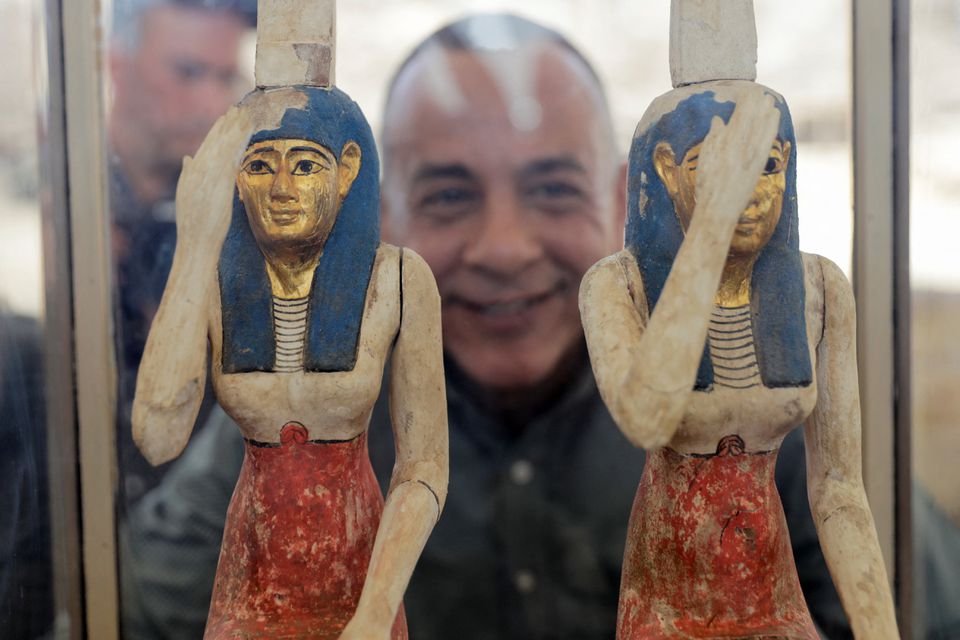
It was reported on the 31st of May 2022 that archaeologists discovered two hundred and fifty coffins and one hundred and fifty statues from the Classical Egyptian period.[1] At the site of a cemetery in Saqqara, the archaeologists uncovered beautiful statues of the Gods Anubis, Amon, Hathor, Bastet, Isis, Min and Nefertum. A sistrum, an ancient musical instrument, was also located as well as a collection of bronze vessels for the rituals connected to the Goddess Isis. A headless statue of the architect that built the Saqqara pyramid was also found, it was announced to the world by Mostafa Waziri, Secretary-General of the Supreme Council of Antiquities. The department is led by Khaled Al-Anani, Egyptian Minister of Tourism and Antiquities. Several treasures were found by the archaeologists, including papyrus with written hieroglyphics, and cosmetics were discovered alongside jewellery such as earrings and necklaces. The items date back to the Late Period we were reliably informed by the Egyptian ministry.[2]
This follows what has been described as ‘a steady stream of archaeological discoveries in recent years.’[1] In April 2022, famed Egyptologist Zahi Hawass proclaimed the discovery of a three thousand-year-old ‘lost golden city’, near Luxor.[1] The city itself, dating back to the reign of King Amenhotep III, recalled as ‘one of Egypt’s most powerful pharaohs’[1], was the seat of power for the monarchy of Egyptian pharaohs. As above, a valuable treasure trove was unveiled with the discovery. Lavish jewellery, decorated property, and crafted amulets amount to the ‘‘second most important archaeological discovery since the tomb of Tutankhamun,’’ according to Betsy Brian, professor of Egyptology at Johns Hopkins University in Baltimore, US.’ [1]
To celebrate the most recent discovery of historical artefacts a spectacular multi-million-pound parade was held in the capital, Cairo. With elaborate pageantry, reminiscent of the pharaonic age, the opulent celebration was dubbed the Pharaohs’ Golden Parade. From 17th Dynasty ruler, Seqenenre Taa II to Twentieth Dynasty ruler Ramses IX, the famed kings of old traversed the procession route. Ramses IX, the monarch to whom the first known peace treaty is ascribed, was also included in the parade. ‘Amenhotep III and his wife Queen Tiye were among the mummies transferred to the new resting place,’ we are informed by the BBC, ‘The lavish spectacle saw 22 mummies – 18 kings and four queens – transported from the neo-classical Egyptian Museum to the new National Museum of Egyptian Civilisation about 5 km away.’ [1]
According to the US Department of State, ‘Most experts and media sources estimate that approximately 90 per cent of the (Egyptian) population is Sunni Muslim and 10 per cent is Christian.’[1] Can one imagine the justifiable outrage, throughout the Muslim world, if non-Muslims were involved in the movement of historical or sacred figures from one burial ground to another. Given the violence perpetuated globally by certain Islamist groups, one can reasonably conclude that there would be bloodshed in response. Negrodoms response, as usual, a silent shrug on the way to another day of ignominy.
‘Egyptians have been witnessing a historic procession of their country’s ancient rulers through the capital, Cairo,’[1] we are informed by reporter Wael Hussein. ‘Their country’s ancient rulers,’ is a headline statement which requires assessment. It is useful at this point to trace the history of Egypt’s rulers to clarify what exactly is meant by ‘their country’s ancient rulers.’ A chronology of Egyptian history highlights several issues which it is here necessary to clarify.
- circa 7000 BCE – Settlement of Nile Valley begins.
- circa 3000 BCE – Kingdoms of Upper and Lower Egypt unite. Successive dynasties witness flourishing trade, prosperity, and the development of great cultural traditions. Writing, including hieroglyphics, is used as an instrument of state. Construction of the pyramids – around 2,500 BC – is a formidable engineering achievement.
- 669 BCE – Assyrians from Mesopotamia conquer and rule Egypt.
- 525 BCE – Persian conquest.
- 332 BCE – Alexander the Great, of ancient Macedonia, conquers Egypt, founds Alexandria. A Macedonian dynasty rules until 31 BC.
- 31 BCE – Egypt comes under Roman rule; Queen Cleopatra commits suicide after Octavian’s army defeats her forces.
- 33 CE – Christianity comes to Egypt, and by 4th century has largely displaced Egyptian religion.
- 642 – Arab conquest of Egypt.
Firstly, the rudimentary chronology is simply to display the extent of the time in which Egyptian civilisation was untouched prior to Arab incursions and thus Arab rulers. During that period the people of ancient Egypt built a civilisation that has induced every generation which has discovered its wonder to look back with awe. Lastly, the debate as to the skin tone of the ancient Egyptians is passé, and such neo-imperialistic debates should not concern Negrodom. The intellectual efforts of the era of Cheikh Anta Diop, Ivan Van Sertima, Martin Bernal and others disproved the nonsensical notion, imbued with racism, that the ancient Egyptians were anything other than African. The narrative has shifted, critical thinking has matured, and ownership of classical Egypt is Negrodoms to reconquer.
When British archaeologist, Howard Carter, discovered the well-preserved tomb of Egyptian Pharoah Tutankhamen in 1922, he bore a hole in the corner of the door. With Lord Carnarvon, his daughter and Carter’s assistant waiting with bated breath, Carter describes the moment, ‘‘It was sometime before one could see, the hot air escaping caused the candle to flicker, but as soon as one’s eyes became accustomed to the glimmer of light the interior of the chamber gradually loomed before one, with its strange and wonderful medley of extraordinary and beautiful objects heaped upon one another.’’ The medley Carter saw and felt was indubitably African and the extraordinary heaps were majestic glimpses of the apogee of African culture. ‘‘As my eyes grew accustomed to the light, details of the room within emerged slowly from the mist, strange animals, statues, and gold – everywhere the glint of gold. For the moment – an eternity it must have seemed to the others standing by – I was struck dumb with amazement, and when Lord Carnarvon, unable to stand the suspense any longer, inquired anxiously, ‘Can you see anything?’ it was all I could do to get out the words, ‘‘Yes, wonderful things.”[1]
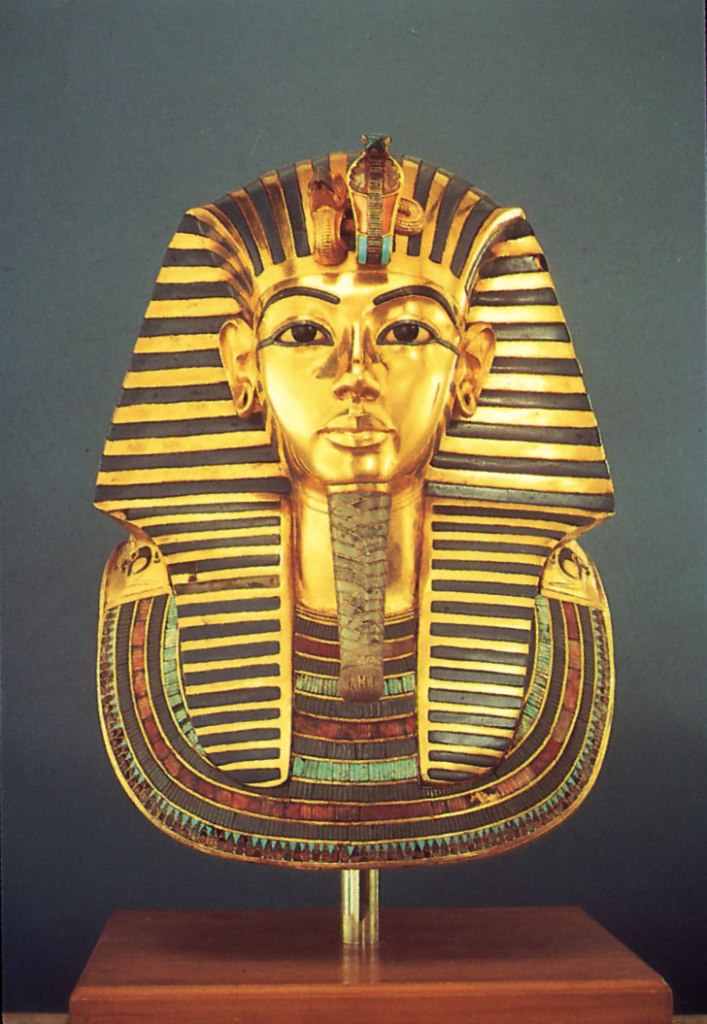
Those wonderful things, we now know, are remnants of the greatest period of artistic expression produced by Black civilisation, furthermore, they arguably represent the zenith of human artistic achievement. From the Antiquités égyptiennes Musée du Louvre to the British Museum a celebration of the artistic achievements of the ancient Egyptians are displayed as treasures from a civilisation which is deserving of global appreciation. Yet, the ancient black Egyptians and their contemporary black descendants are virtual strangers.
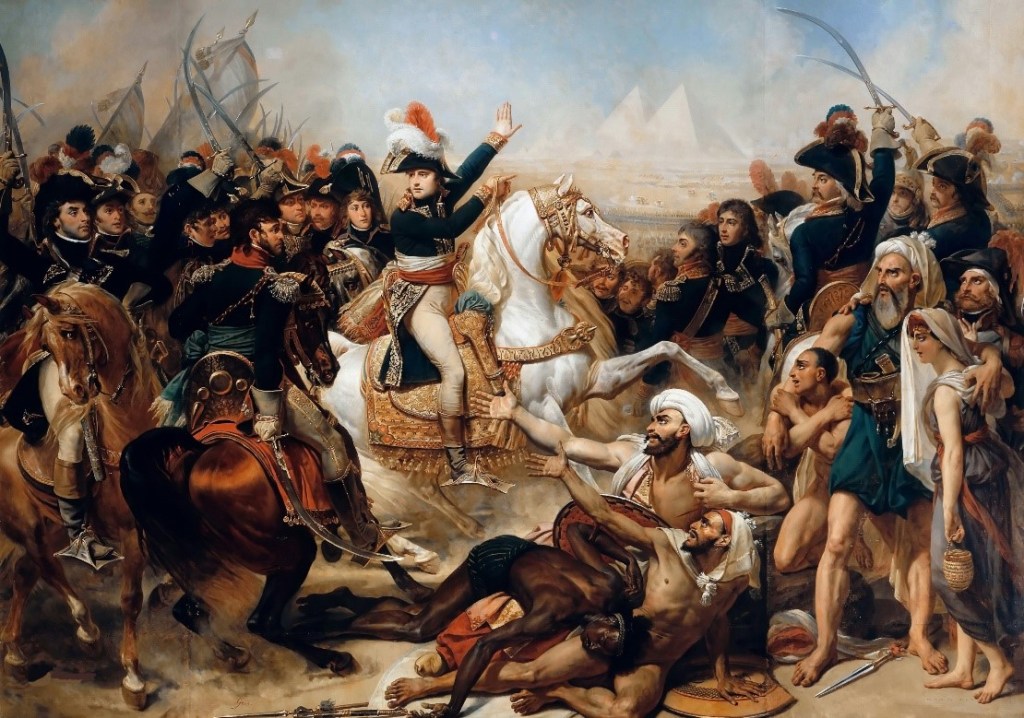
‘‘Think, my soldiers, from the tops of these pyramids forty centuries look down upon you,’’ Napoleon Bonaparte, Emperor of France, informed his soldiers during his conquest of Egypt at the turn of the 18th Century. Napoleon had indeed thought, arriving in Egypt with one hundred and sixty scholars and artists, alongside the thirty-five thousand troops required to fight the resident Ottoman army. ‘While the expedition’s chief aim was martial, it had a secondary purpose: to collect scientific and historical information about Egypt, which many in France believed was an ancient civilisation equivalent to classical Greece and Rome.’[1]
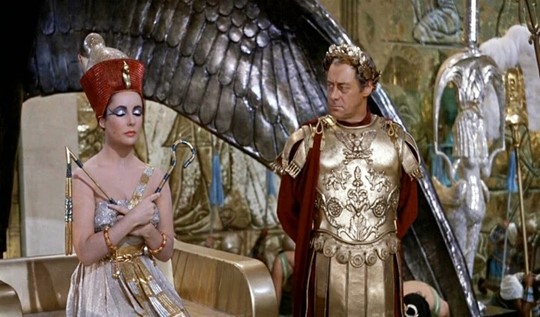
While classical Greece and Rome are held in the highest regard by their European descendants, classical Egypt which the Europeans considered equivalent is held in ignorant contempt by its African and diasporic descendants. Classical Rome and Greece have been immortalised by Europeans in literature, art, and in modern times through films, by Europeans for Europeans and the wider world ignorant of their historic greatness. A simple search will unearth one hundred and six notable films released during the 1950s & ’60s on the topic of classical Europe.[1] From Julius Caesar, Ben-Hur, Spartacus, Caesar and Cleopatra, Quo Vadis and Alexander the Great, a catalogue of memorable films have etched into the minds of generations notions of ancient Rome, Greece and above all, the greatness of European civilisation. The idea of what a Roman looked like has been forged and cemented by these films, the pomp and ceremony of which the ordinary viewer has no other reference, became historical fact by the time the credits rolled.
It seems we must wait an eternity for the African or the diasporic community to release a single film immortalising the ancient Egyptians, Zulus, Moors and Ethiopians instead of the plantations of Mississippi, nightclubs of London or the notion of Black Love. While the Arabs of Egypt are celebrating a grand procession of Black history, the Black people of the United Kingdom are celebrating the 3rd Annual Windrush Caribbean Film Festival. Never have a people, throughout history, celebrated with such zeal leaving a colony and moving to an imperial capital to undertake lowly jobs the people of the capital would rather not do. Nonetheless, on with the dance; ‘From 17 June to 17 July – in London, Birmingham, Cardiff, Glasgow, and Liverpool as well as through virtual screenings – the third annual edition of WCFF will present a collection of feature, documentary and short films accompanied by panel discussions and workshops themed “From Empire to Commonwealth”.[1] We are thus informed that instead of films, documentaries and discussions on Ramses IX, Seqenenre Taa II, Amenhotep III or Queen Tiye, we would rather ‘engage and educate audiences across the UK about the contributions of the Windrush generation and their descendants to the country through film screenings, talkbacks, interviews and workshops.’[1] Where would we be without the British and where would the British be without us, is a theme with longer life than the empire itself, kept zealously alive by its colonial admirers.
A short list of the films, which are part of the OBE propaganda drive that is the Windrush Film Festival, is instructive in displaying our priorities.
- RUSS HENDERSON
The film recounts Henderson’s long road to fame, from struggling musician in the 1950s fighting racism and poverty, to receiving recognition in the form of an MBE for long-standing services to the music industry.
- STILL WE RISE
A documentary which captures the firsthand experiences of our Westminster Windrush generation as they took an extraordinary step in their lives to travel to Britain.
- SUPERHEROES WEAR HOODIES
A group of British Black youths from one of London’s most notorious estates defy public perception by supporting their local community when they needed it the most
- THE ARRIVAL
It’s August 6th, 1962 – Jamaican Independence Day. Daisy, a young Jamaican arrives to the ‘Mother Country’ of Britain to start a new life with her husband, whom she has not seen for two years.
- HATS
A black barrister Eve struggles with her decision to put her West Indian mother into a white suburban care home.
We can now explain the unforgivable silence from Negrodom vis-à-vis classical Egypt. Where are the streams of contemporary literature from Black scholars, the world over, documenting for the coming generations the glory that was ancient Egypt? Where is the plethora of films, from Black producers, bringing to magical life the greatest black civilisation that there has been? Where is the surfeit of majestic paintings, from Black artists, depicting famous scenes from the days of classical Egyptian yore? The Ebony Muse challenges the reader to locate them. What the reader shall locate, once the futile search is complete, is a pitiful list of people of colour who pronounce weekly the need for ‘Black representation’. No need for your own history when you are part of British history.
While the OBE class and their diasporic allies concentrate their energy on begging Europeans whimperingly for increased ‘Black History’ in predominately white schools, this history is contained to their favourite periods. We hear plenty of appeals for the depression of the Atlantic slave trade, the suffering of the slave period in the Americas and Caribbean, the ignominy of the World Wars for Black soldiers and even the humiliation of the ‘Windrush generation’ to be taught in predominately white schools, lest Europeans forget how much suffering they have caused the race. Yet, not a mumbling word is uttered about the glory that was classical Egypt. Is Black History only Black History when white people are involved in the story? It certainly seems so.
‘Television has served as ‘‘a primary source of America’s racial education,’’ says UArizona scholar Stephanie Troutman Robbins,’ reads the headline of one article, falling to say that we have no desire to make our own programming to uplift the race.[1] ‘Why we need to tackle racial inequality in TV and film’[1], states another article following the lead of a report from McKinsey & Company: ‘Black representation in film and TV: The challenges and impact of increasing diversity.’ Needless to say, the report focuses on what black people can do and achieve in a white framework, just as desired. In a New York Times article Nine Black Artists and Cultural Leaders on Seeing and Being Seen, ‘Amy Sherald, Michael R. Jackson and others discuss the challenges and opportunities of cultivating black audiences and dismantling historically white institutions.’ We yearn for the day when there is, if not excellence, at least honesty in the race and these faux revolutionaries can own the fact that white institutions are their only concern.
Ms Dawn Butler, former UK shadow Women and Equalities Secretary, debasingly lamented the fact that ‘‘At the moment, history is taught to make one group of people feel inferior and another group of people feel superior. And this has to stop. We need to look at history and we need to improve it.”[1] When Ms Butler talks of ‘we’, she speaks not of Black people and their responsibility to document and promote their history, but of the English and the pitiful desire from black sycophants to be included in their historical and contemporary ‘we’. ‘‘You can go through history thinking that the people who were enslaved were not a part of the uprising.’’ Ms Butler, with as an appropriate surname as fate could muster, continued to rave wildly, ‘‘You can go through history and not understand the richness of Africa and the Caribbean.’’[1] What the Butler fails to comprehend is that if you acknowledge your own history and write about it, the need for recognition from others lessens in its intensity.
Is it any wonder that the ‘richness of Africa’ cannot be found in the annals of British or American imperial history, not to the Butler and her colleagues in delusion. As a juxtaposition, her colleague in Parliament former Shadow Leader of the House of Commons, Chris Bryant has written books acknowledging his own history. Two are biographies of the British Parliament and a third ‘A proudly partisan history of the British aristocracy.’[1] Instead of the Butler begging people like Bryant to write about black slaves being gloriously ‘part of the uprising’ in Morant Bay, perhaps she should use her privileged position to write about the glorious history of Ancient Egypt.
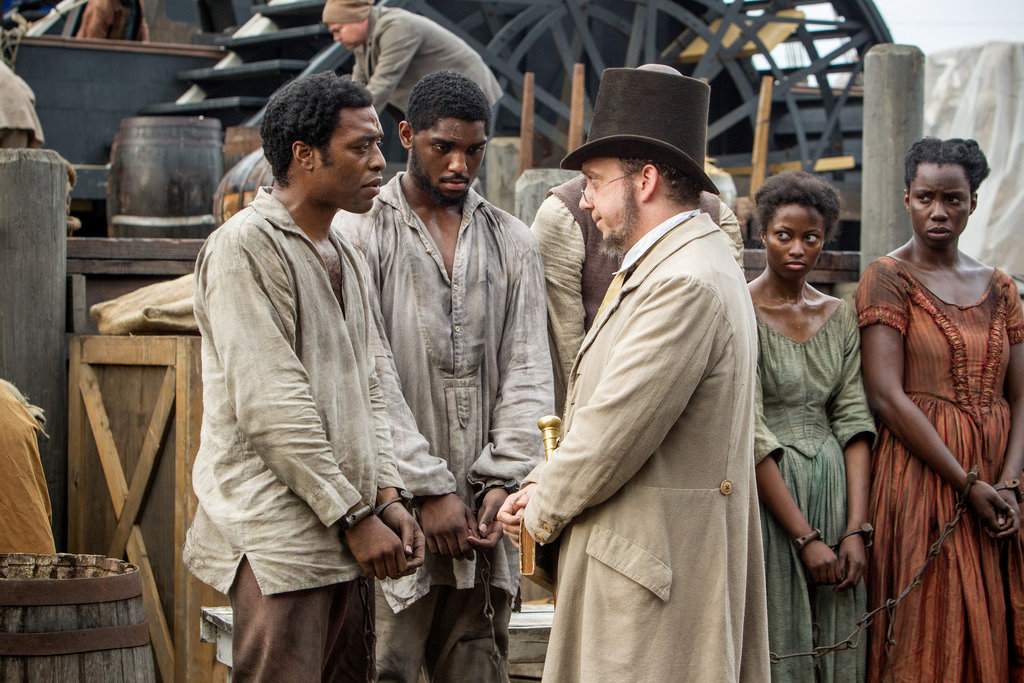
The Black Curriculum, a British ‘social enterprise’ state with the usual self-congratulatory zeal, ‘since founding in June 2019, the team have been on a mission to create fully rounded citizens through the education of Black British history, both in and out of schools.’[1] We are informed that they aim ‘to deliver black British history all across the UK.’ The founder and CEO, Lavinya Stennett, ‘is determined to challenge the Eurocentricity of the school curriculum at a nationwide level.’[1] Little wonder then that we are strangers to classical Egypt when our people are lost in a trance, defined by an obsession with the European and how they are viewed through white eyes. The repetitive farce continues with no end in sight and the Black British history (a dubious historical subgenre) is prioritized above actual African (i.e., Black) History.
These are crimes for which none is ever charged, yet each year the crime rate rises. We are told by The Black Curriculum that, ‘We also have a curriculum and develop free and licensable resources for schools to teach students about Black history.’ The Ebony Muse has requested the curriculum and a separate article will follow about its contents and wider connotations. The desire for improvement in Black representation goes unmercifully on, its piteous tentacles traversing every sector, draining independent thought of life, and breathing nefarious life into servile thought.
Returning to classical Egypt, discovered, and excavated by Europeans in the 20th Century, the Arabs have taken over from the Europeans in the discovery and excavation of what is unquestionably Black History. Without a fight, nor even a sabre-rattle, history itself has been surrendered to a foreign people with no racial, cultural, or religious link to the ancient Egyptians. ‘Egypt is seeking to promote its ancient heritage to revive its tourism sector, which has been flagging after years of political turbulence and disruption caused by the coronavirus pandemic,’[1] The BBC reported gallingly. To be clear, the current occupants of Egypt have appropriated Ancient Egyptian history as their own, with no legitimate connection to the history other than the current occupancy of the country. ‘Its cultural history’, is both inaccurate and accurate. For, in short, the fact that Black people have surrendered classical Egypt as their own to Arabs is accepted not only by the race itself, but as a global fact. None else is to blame, for this is a racial blunder without comparison.
It is perhaps useful, to conclude with the chronology and note with sorrow that as centuries tumbled and old Egypt changed hands, never was a Black finger lifted by any to reclaim Egypt. By all indications, Classical Egypt has also been lost forevermore without a single shot in anger being fired.
969 – Cairo established as (Arab) capital.
1250-1517 – Mameluke (slave soldier) rule, characterised by great prosperity and well-ordered civic institutions.
1517 – Egypt absorbed into the Turkish Ottoman empire.
1798 – Napoleon Bonaparte’s forces invade but are repelled by the British and the Turks in 1801.
1805 – Ottoman Albanian commander Muhammad Ali establishes dynasty that goes on to reign until 1953, although nominally part of the Ottoman Empire.
1859-69 – Suez Canal built, but it and other infrastructure projects near-bankrupt Egypt and lead to gradual British takeover.
1882 – British troops defeat Egyptian army and take control of country.
1914 – Egypt formally becomes a British protectorate.
Independence restored
1922 – Fuad I becomes king and Egypt gains independence, although British influence remains significant until 1950s.


Leave a Reply