Society itself is split in two, between the majority and the minority. This fissure has developed within the black race, opening up new divisions, altering perceptions and distorting tradition values. This paper is dedicated to exploration of the groupings within the race that now constitute the majority and minority.
- British Identity vs Diasporic Identity
‘We find first that minorities express strong British identities – stronger in fact than the White British majority, and that these increase across generations,’ the Working Studies Paper found when studying Britishness and Identity Assimilation among the UK’s Minority and Majority ethnic groups. The diasporic black community has a long history of zealous assimilation in the plethora of countries in which it has built small, embattled communities. This has been well documented by The Ebony Muse. The question of what this means for the youthful generations of Black Britons is the most significant issue for the community in the country and raises a wider question regarding the black diasporic communities.
Rudimentary sociology will inform the reader of the key elements of a culture: norms, values, beliefs and language. For the black Briton, as part of the minority, they reside in a country with the established elements of a culture already fixed in place for centuries. The diasporic black, in addition, also has the disadvantage of not having a fixed culture in place, for their culture has been decimated by colonialism, racism and disintegration by the dominant race in centuries past. Theirs is a culture, if from the Caribbean or Americas, born in and moulded by the dominant culture in those societies. For the diasporic black, British, Spanish, American, Portuguese or French imperial society has provided them with the key elements of culture upon which they have they have questionably built.
‘Holding a strong British identity increases over generations as the tendency to have a strong minority identity reduces,’ states the revealing study, informing us that it is the ‘Caribbean group –a group recognised as being socially, geographically and in employment terms the most ‘assimilated.’ The Caribbean group is the most assimilated group, despite feeling ‘alienated by a society that is still strongly stratified along racial and ethnic lines.’ This study looked into the following communities: Caribbean Christian, African Christian, Other Ethnic group Christian, Indian Muslim, Pakistani Muslim, Bangladeshi Muslim, African Muslim, Arab-Turkey Muslim, Indian Hindu, Indian Sikh, Chinese No religion, Other ethnic group No religion, Other ethnic -religious combinations, Mixed, and Other white. It is quite an achievement for the Caribbean community to come atop of all minorities in assimilation, potentially its greatest achievement since arriving in the metropole. It is important to note that the black Africans, with a culture that was diminished and perverted but not obliterated by the British are able to withstand better the wholescale move toward Britishness. However, this will be severely tested in the coming years with the young generations of British Africans assimilating at a pace that will soon reveal itself in figures that are similar to the above.
- Cultural Norms vs Assimilation
The question of what this means for the ‘Caribbean group’ must be assessed in detail. Yet, before proceeding to examine the reality of the findings above, we must establish how the key elements of this culture have been altered by the dominant culture. The language element of culture need not be discussed any further, given the dominance of the English language amongst the former colonies, with those countries continuing to recognize English as their official language to this day. This despite the linguistic variations of English, spoken by the lower orders in places such as Jamacia.
The same quick conclusion can be reached when assessing beliefs, with the Caribbean, South American and African communities’ bulwarks of Christendom. Even in 1979, Trevor Beeson, the radical Anglican theologian and future dean of Winchester, wrote: “In these African and West Indian churches lies the best hope of re-Christianising the British nation and in helping the weary churches of these islands to rediscover the true character of Christian faith and worship. The Pew Research Center revealed that ‘two-thirds of Black Americans (66%) are Protestant, 6% are Catholic and 3% identify with other Christian faiths.” Blackness and Christianity are wedded then, the majority culture making compliant worshippers of the diasporic community and their former colonials. Before moving on from religion, it is interesting to note that in Africa, where the black man is the dominant majority, there has been projected to have 727 million Christians in 2060.
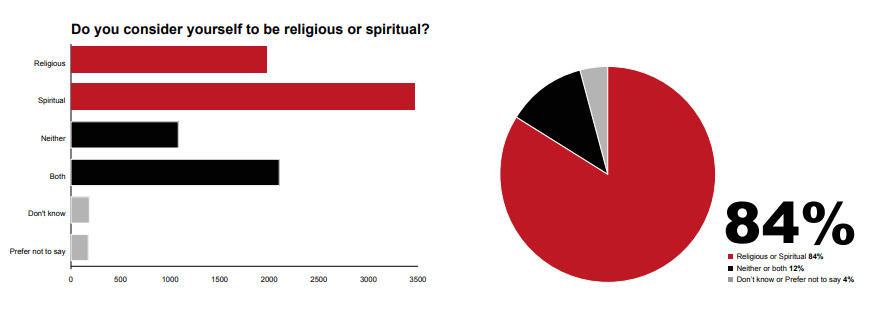
The University of Cambridge undertook what it humbly described as ‘The largest survey to date of the opinions and attitudes of Black people in Britain.’ The survey, Black British Voices revealed within was the continued strength of the relationship with Christianity. Within Britain itself, 84% declare themselves ‘religious or spiritual’, and the research confirmed that ‘Christianity was the most popular faith’, the findings revealed, ‘in contrast to the national pattern which shows Christianity generally declining in importance, and for the first time in 2021 being selected as a religious preference by a minority of census respondents.’ The readers of the report are informed, as a footnote, that ‘After Christianity, Islam and Rastafarianism represented the second and third most popular faiths mentioned by respondents.’ We are, tellingly, never informed how ‘popular’ Rastafarianism is.
This leaves norms, values and beliefs as the last bastions of culture. If norms are shared rules and expectations, then in short values are shared beliefs regarding matters of import for the individual and community as a whole. The question then is how do the black Britons shared rules and expectations differ from those of the white majority? The same question is to be posed regarding their values and shared beliefs. Does the contemporary black man in Britain have any values or beliefs that have not been placed before them by the English, French or Americans? To question what the shared rules and expectations of black Britons are would be to open Pandora’s box.
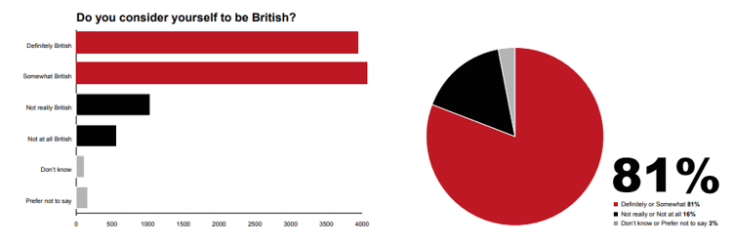
Decades of irrefutable evidence has been produced by the race itself to conclude that there are no shared rules or expectations worthy of the name that has not been bequeathed by the dominant race. British Future, produced a report, Race and opportunity in Britain: finding common ground, which was submitted to the Race Commission. Questions were posed and revealing answers were received. ‘Black and Asian people born in Britain are just as British as white people born in Britain’, was one of many leading questions posed. 60% of black respondents strongly agreed and 20% agreed. 80% of black people consider themselves as English as white people, as opposed to a mere 13% that disagree. This is further confirmed by the Cambridge survey, ‘In both our survey and through interviews, we invited BBVP participants to reflect on what the concept of “Britishness” means to them and we found a substantial majority of 81% describe themselves as either ‘definitely’ or ‘somewhat’ British. A much smaller proportion of respondents described themselves as either ‘Not really’ or ‘Not at all’ British (16%).’
It is this majority and minority, within a minority, that this article seeks to consider their plight, cultural modus operandi and position within the race.
- Majority vs Minority
It is important to note how the black majority has become one with wider British and Western culture, social mores, political beliefs and even notions of love. The importance of social media in shaping modern western culture cannot be understated. It has been able to create a culture which countless millions unthinkingly subscribe to, encompassing Europe, America and already beginning the integration of the East. Watching the same content, espousing similar views, holding identical beliefs, using similar vernacular, dressing similarly, finding humour in similar things, loving in the same way; it is an age of conformity beneath a guise of nonconformity
The majority blacks have been swept along with the winds of conformity, grasping at the chance to finally be convincingly the same as white people. To be a member of the black majority is to view the world through similar lenses as those that form part of the majority culture. What outrages white people, now enrages us all. For we are all part of a global culture that finds outrage in the outrageous.
The majority is split into two distinct groups. The first, educated, wealthy and divorced from the lower orders are little more than caricatures of the dominant race, with core values that mirror their white counterparts. The rules they share are based upon British values and are shared more with British liberals than the lower orders of their own racial grouping. They remain wedded to the idea of black Englishness and the group is a haven of loyal law-abiding, Eurocentric, globalist citizens. This group is led by the OBE set and best optimized by leading members such as Afua Hirsh. ‘There is a powerful subconscious narrative that British identity is a white identity and that any people who claim it who aren’t white, are pretenders.’ The raison d’etre of the first group in the majority is to defeat this narrative and blaze a trail toward full assimilation.
The second group within the majority are made up of those emanating from a lower socio-economic standing, operating in a different social stratum and thus their Britishness is more defiant and desperate than their wealthier counterparts. They differ only in their proclivity to adhere to the law, and ephemeral nostalgia of their diasporic background. Despite considering themselves English, they subscribe to a subculture that celebrates imaginary nonconformity and thus have a more confused relationship with their national status and indeed their race.
An excerpt from one of the contributors to the Cambridge survey displays this imaginary nonconformity and racial confusion. ‘I don’t feel 100% British, I’m Black British. I class myself as a Black British woman. I don’t really follow cricket, per se, but if England are playing the West Indies, I’m going to support the West Indies because there’s that connection, it’s a spiritual connection. Knowing that we share that St Lucian heritage, there’s so much joy. When I hear that St Lucian accent, straightaway boom! I’m Black British, but my heritage, my soul, emotional, spiritual, is St Lucian.’
With a majority, perverted by racial loathing and longing articulated above, it is little wonder that mental health issues are reported to be rampant within the community.
If the above are the eighty percent, who are the sixteen and how do they live? If to be in the majority is to share British norms and values, then to be in the minority is to subscribe to a separate set of values. This, however, is a silent minority, who publish few if any articles, seek no governmental reform, attend no bourgeois fundraisers, nor lead social media campaigns. This is a minority silenced by the dominance of the majority.
Therefore, let us examine five established issues of the majority that are in the public realm, issues that are supported by members of the eighty percent, and given wide media coverage.
- The Windrush Era and Scandal – The notion that the arrival of Caribbean migrants was a historic turning point in British History. That the black people that arrived heralded the creation of modern cosmopolitan Britain. Further that the arrivals transformed the NHS, TFL and a host of other British companies and institutions in such a manner that the arrival of the ship named Windrush should be celebrated as an important cultural moment. Thus a celebration of Black contribution is required on television, in theatres, movies, books and anything else that can be utilized for propaganda purposes.
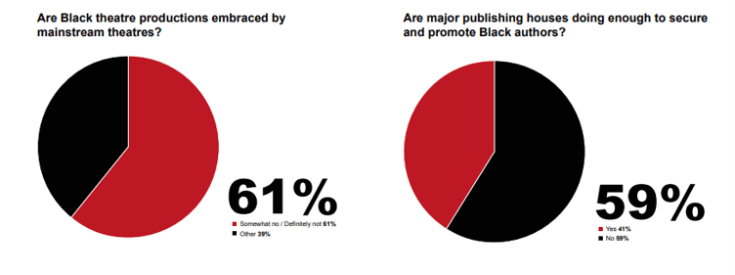
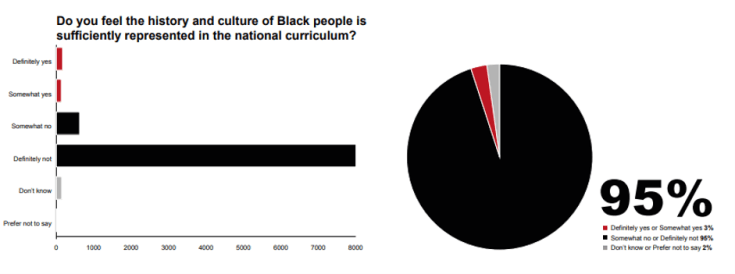
- Black History in British Schools – The idea that the British educational system is systematically racist and that the additional of ‘black’ history into the predominately white schools will create racial harmony, lessen racism and garner more respect for the apparent achievements of black people in Britain.
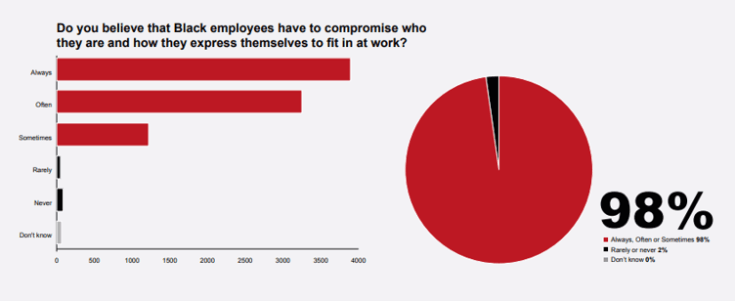
- Ethnic Diversity in British Institutions – ‘Change from Within’, the notion that minority inclusion in majority white institutions will improve the experience of minorities in a majority white society, create greater aspiration within the minorities, lessen entrenched racism in those institutions and increase the prestige of the minority groups with lofty positions. This notion is expanded to ensure that the anti-discrimination employment acts are implemented and that the hiring process is free from racism in any sector and stratum.
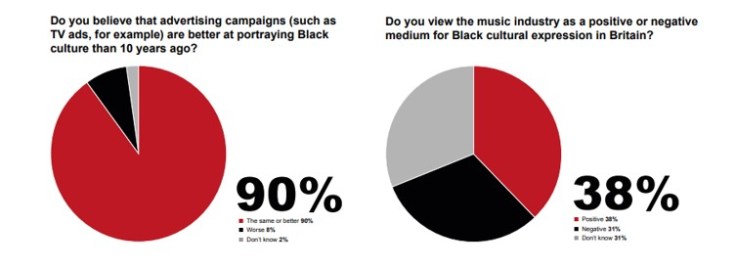
- Discriminatory treatment / National Recognition: Those that consider themselves as English as white people resent the fact that they are treated differently because of their appearance. Respect and love are sought by the eighty percent who fight with unceasing passion to be recognized as equally English as any other, any hint that their colour differentiates them from the white English is evidence of systematic discrimination and little Englandism.
- Systematic Racism: The notion that institutionalized racism in government institutions such as the policing, legal and healthcare systems lead to discrimination toward black people in England. Furthermore, it is argued that these institutions are so innately racist that only diversity within the upper echelon of the ranks can resolve issues that are decades, if not centuries old.
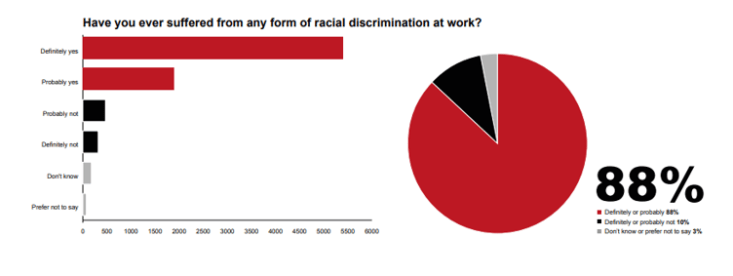
The graphics provided by the Cambridge Survey are a useful reminder of the impact of the majority in ensuring that their agenda has been enshrined as a national and racial agenda. Importantly, these five issues are all matters that white British liberals are happy to support and that align nicely with their own notions of liberalism. They encompass notions that all can agree with, such as governmental institutions that do not discriminate and employers that hire based upon merit rather than race.
However, there is far more that the sixteen percent do not subscribe to. The presumption that accompanies acculturation is that all desire to mimic the dominant culture, that imitation in itself is achievement. That to be leader of the Labour or Tory party is a great achievement, or the first black police commissioner, or to be a teary Mother of the House of Parliament, or to have black history taught to white children in British schools, or to reach the apogee and obtain the vaunted OBE and pretend to be a reluctant recipient. Socially, the unyielding pursuit toward integration, buttressed by social media led conformity, has led to the disintegration of the social and household norms of the sixteen. That which was an established cultural modus operandi is now a nostalgic memory of a culture swamped by the majority culture. The minority member, if inviting a majority member into their home, must except behaviour not that they dictate by the behaviours acceptable in the majority culture. To expect otherwise would be to mark one out as different and thus primitive.
Here we must also discuss love, relationships and miscegenation, leading to a wider assessment of the impact on the sixteen percent. In the context of the majority / minority culture, it is clear that any from the minority that is in a relationship with someone from the majority must cede their culture and accept the norms of the dominant culture. Within the power structure of love the person from the minority is required to accept the norms of the dominant culture and act in a way that is accepted by the dominant culture. The person from the dominant culture only cedes out of empathy and love, not requirement. If unable to perform this transformation the minority lover will be considered to be behaving in a manner that is unacceptable. For the relationship to endure, the minority lover must adopt the majority culture and importantly, act in a relationship in a manner that is acceptable to the mores of the dominant culture.
The views of the majority lover undergo a transformation which enables the relationship to endure on the terms of the majority lover. Original minority perspective is lost, then replace with a majority perspective. A conscious alteration becomes unconscious as the minority lover begins to think, act, speak and feel like a majority person. Fanon’s groundbreaking work articulated this transmutation with clear brilliance.
‘Who but a white woman could do this for me? By loving me she proves that I am worthy of white love. I am loved like a white man. I am a white man. Her love takes me on the noble road that leads to total realization….
I marry white culture, white beauty, white whiteness.
When my restless hands caress those white breasts, they grasp white civilization and dignity and make them mine.’
The appetite to be part of the majority is insatiable; the historic thirst remains unquenched. With racial lines confused, ranks of people of colour now counting themselves within that grouping, the attainment of majority status has acquired a sense of normalcy. Where in Fanon’s age only a white woman lover could bequeath normalcy, now a majority lover regardless of colour is able to. The consequences are the same for a person from the black minority whether they marry a white person or a member of the black majority. Integration into the mores and modes of thinking of dominant culture is inevitable, stripping the lover of the final remnants of minority culture.
As an example, within the sixteen percent homosexuality is traditionally aggressively reviled. When in a relationship with a majority lover this revulsion gradually dissipates and is replaced by liberal acceptance. For in the majority culture acceptance of homosexuality as a social norm and opposition to this is unacceptable, marking one out as different and primitive. This example can also be used for modern LGBTQ rights, which the majority utterly oppose but utter dissent only internally for fear of being recognized as different. Minority members raised in a household that values unselfish conduct in minority culture one is raised upon the African colonial experience as a distinctive exchange of systematic brutality and oppression to which one was inextricably linked. When in a relationship with a majority lover, one is forced to ignore a plethora of historical nuances to suppress truth, give undeserved parity within the imperial existence and acknowledge the pain of modern folly. They are now imbued with majority moral outrage on matters that would hitherto have garnered a minority shrug.
An exploration of the minority majority theory within the context of love and the modern construct is required and will follow this article. For the purposes of this article, a few axiomatic truths can be established. The minority lover is forced to accept a relationship construct that is far different from that which is reminiscent for those within his minority culture. The manner in which his or her parents loved and behaved in a relationship is considered primitive. The way to love, to interact, to display affection, to respond in disputes, to behave in public, and to conduct oneself is all dictated by majority culture. The minority person, if bound to a modern lover, must accept the terms of modern majority culture. The rise of the influence of movies/television and social media in this aspect cannot be underestimated, neither can the fact be ignored by these platform project notions of love and relationships steeped in majority culture, society and history. With the standardization of conduct, the uniformity of behaviour is driven by the platforms which dictate what acceptable behaviour is in majority culture. A community historically disinclined toward public displays of affection have now adjusted to majority culture and are well acquainted with acceptable conduct. A community with a historical inclination toward stoic conduct in a household must now content with contemporary notions of acceptable emotional behaviour and discourse. With much talk of ‘black love’ in contemporary society, it is clear that love is being defined by the majority. For a community well accustomed to majority oppression, the annexation of love comes as an unwelcome extension of influence.
Yet the central question remains unresolved. What is it that the silent sixteen, the traditional minority, believe in? If not the dominant majority culture, how are they opposed to the conformist majority? We know what has been, yet what is remains elusive. Do the sixteen percent hold the same values as their parents or has minority culture evolved? What is evident is that the sixteen are a truly silent minority. It is noteworthy that the majority have prominent and vocal, if questionable, leadership. The sixteen have no notable leaders, instead being confined to anecdotal discourse rather than a published agenda. The sixteen is an insular and diminishing group, leaving the subject unclear as the culture itself begins to slip from view. As the generations pass members of the sixteen join the eighty, leaving behind a culture bereft of manpower. What is clear is that a minority within the culture remains unswayed by the influence of wider western culture that so entices the remainder of the race.
References
(n.d.). Retrieved from https://www.theguardian.com/science/article/2024/may/25/is-systemic-racism-medicine-black-peoples-lives-risk-layal-liverpool
(n.d.). Retrieved from https://www.youtube.com/watch?v=v0KE2Zp0IOA
(n.d.). Retrieved from https://www.cam.ac.uk/stories/black-british-voices-report
Anna Leach, A. V. (n.d.). Black British history: the row over the school curriculum in England. Retrieved from theguardian.com: https://www.theguardian.com/education/2020/jul/13/black-british-history-school-curriculum-england
Butler, D. (n.d.). Dawn Butler: ‘It is shocking, the disrespect for Black women in the Commons’. Retrieved from theguardian.com: https://www.theguardian.com/politics/2023/aug/14/dawn-butler-mp-it-is-shocking-the-disrespect-for-black-women-in-the-commons
Cambridge, U. o. (2023). Black British Voices Project Report 2023. Cambridge : University of Cambridge .
Dodd, V. (2024, Jan 5). Head of Britain’s police chiefs says force ‘institutionally racist’. Retrieved from https://www.theguardian.com: https://www.theguardian.com/uk-news/2024/jan/05/head-of-britains-police-chiefs-says-force-is-institutionally-racist-gavin-stephens
elected, F. b. (n.d.). Vaughan Gething resigns as first minister amid Welsh Labour turmoil. Retrieved from bbc.co.uk: https://www.bbc.co.uk/news/articles/c2le985g3gyo
Hewitt, G. (n.d.). In its progress and pain, Windrush brought us the birth of modern, multicultural Britain. Retrieved from theguardian.com: https://www.theguardian.com/commentisfree/article/2024/jun/22/windrush-birth-modern-multicultural-britain-west-indians
Hirsch, A. (n.d.). Vulnerable, British and black? Now that’s enough to have you face deportation. Retrieved from http://www.theguardian.com: https://www.theguardian.com/commentisfree/2022/may/03/british-people-id-black-boy-from-kent-deportation-id-privilege
Ministers ‘dragging feet’ on adding Black history to curriculum, teaching leader warns. (n.d.). Retrieved from .independent.co.uk: https://www.independent.co.uk/news/education/education-news/black-history-month-curriculum-schools-b2177688.html
Olusoga, D. (n.d.). Britain’s failure to honour black and Asian dead is a scandal of the present, not just the past. Retrieved from http://www.theguardian.com: https://www.theguardian.com/commentisfree/2021/apr/25/britains-failure-to-honour-black-and-asian-dead-is-a-scandal-of-the-present-not-just-the-past
Olusoga, D. (n.d.). Who gets to define ‘Britishness’ when making TV? Not people of colour, that’s for sure. Retrieved from theguardian.com: https://www.theguardian.com/commentisfree/2021/oct/03/who-gets-to-define-britishness-when-making-tv-not-people-of-colour
Platt, A. N. (December 2013 ). Britishness and Identity Assimilation among the UK’s Minority and Majority ethnic groups. Understanding Society Working Paper Series .
(2021). Race and opportunity in Britain: Finding common ground. London: British Future .
Septimius, A. H. (2021). The Blundering Generals Leading Negrodom To Death. Part IV: David Olusoga & The OBE Class. Retrieved from ahseptimius.wordpress.com: https://ahseptimius.wordpress.com/2021/07/25/the-blundering-generals-leading-negrodom-to-death-part-iv-david-olusoga-the-obe-class/
The Guardian view on black British Christians: keeping the faith. (2023, April 9). Retrieved from https://www.theguardian.com/: https://www.theguardian.com/commentisfree/2023/apr/09/the-guardian-view-on-black-british-christians-keeping-the-faith
Walker, J. G. (n.d.). Vaughan Gething resigns as first minister amid Welsh Labour turmoil. Retrieved from theguardian.com: https://www.theguardian.com/politics/article/2024/jul/16/vaughan-gething-resigns-first-minister-wales
We Asked 10 Couples What ‘Black Love’ Means to Them and Their Answers Will Move You. (n.d.). Retrieved from essence.com: https://www.essence.com/love/we-asked-10-couples-what-black-love-means-to-them-and-their-answers-will-move-you/
Word ’empire’ made accepting OBE difficult, says David Olusoga. (n.d.). Retrieved from theguardian.com: https://www.theguardian.com/politics/2019/apr/02/word-empire-made-accepting-obe-difficult-says-david-olusoga
Younge, G. (n.d.). The politics of Generation Grime. Retrieved from garyyounge.com: https://www.garyyounge.com/article/the-politics-of-generation-grime


Leave a Reply